


Sub Categories
- How long does it take a fig to ripen?
The time it takes for a fig to ripen can vary depending on several factors, including the fig variety, growing conditions, and overall health of the tree. Here’s a detailed breakdown of what to expect:
Factors Influencing Ripening Time:
-
Variety of Fig:
-
Common Varieties: Different fig varieties have different ripening times. For instance, 'Black Mission' and 'Brown Turkey' figs tend to ripen earlier in the season, while 'Kadota' and 'Calimyrna' figs might ripen later.
-
-
Climate and Growing Conditions:
-
Temperature: Figs ripen more quickly in warmer climates with plenty of sunshine. High temperatures and long days promote faster ripening.
-
Watering: Consistent watering helps figs ripen properly. However, overwatering can cause figs to split or develop a watery texture.
-
-
Tree Age and Health:
-
Mature Trees: Older, well-established fig trees generally produce and ripen fruit more reliably than younger trees.
-
Tree Health: A healthy tree with adequate nutrients will support better and faster fruit ripening.
-
Typical Ripening Time:
-
From Fruit Set to Ripening:
-
Timeframe: Once a fig fruit has set (started to form), it typically takes about 60 to 90 days to fully ripen. This period can vary with the factors mentioned above.
-
-
Seasonal Timing:
-
Early Season (Breba Crop): If your fig tree produces a breba crop (first crop on last year’s growth), these figs usually ripen in late spring to early summer.
-
Main Crop: The main crop, which grows on the current season’s growth, generally ripens in late summer to early fall.
-
Signs of Ripeness:
-
Color Change:
-
Varietal Differences: Different fig varieties change color when ripe. For example, 'Black Mission' figs turn a deep purple-black, while 'Kadota' figs become yellowish-green.
-
-
Texture:
-
Softness: Ripe figs become soft to the touch. They should yield slightly when gently pressed but not be mushy.
-
Stem Bend: The stem of a ripe fig often bends and droops slightly.
-
-
Ease of Harvest:
-
Separation: Ripe figs should detach easily from the tree. If you have to pull hard, the fig is likely not fully ripe yet.
-
-
Taste:
-
Flavor: The best indicator is taste. Ripe figs are sweet, rich, and flavorful. Unripe figs are often bland and less juicy.
-
-
- How long will it take my fig tree to fruit?
The time it takes for a fig tree to produce fruit can vary depending on several factors, including the tree's variety, growing conditions, and care. Here's a detailed look at what you can expect:
Factors Influencing Fruiting Time:
-
Tree Age and Variety:
-
Young Trees: Typically, a fig tree planted from a young sapling or cutting will start producing fruit within 2 to 3 years. Some varieties might take a bit longer, up to 4 or 5 years, depending on their growth rate and environmental conditions.
-
Mature Trees: If you plant a more mature tree, such as a tree that's already a few years old, it may produce fruit sooner, potentially within the first year of planting.
-
-
Growing Conditions:
-
Climate: Fig trees thrive in warm climates with plenty of sunlight. Ideal conditions include long, hot summers and mild winters, which can encourage faster fruit production.
-
Soil Quality: Well-drained soil rich in organic matter promotes healthy growth and quicker fruiting. Poor soil conditions can delay fruiting.
-
Watering and Fertilization: Consistent watering and appropriate fertilization help fig trees establish strong root systems and produce fruit sooner. Overwatering or under-fertilizing can hinder growth.
-
-
Planting Method:
-
Rootstock vs. Cuttings: Fig trees grown from cuttings typically establish and bear fruit faster than those grown from seeds. Rootstock grafted trees may also fruit more quickly.
-
-
Pruning and Care:
-
Pruning: Regular pruning helps shape the tree, encourages healthy growth, and can stimulate fruit production. Removing dead or diseased branches ensures the tree's energy is directed towards fruiting.
-
Pests and Diseases: Managing pests and diseases promptly keeps the tree healthy and supports quicker fruiting.
-
Typical Fruiting Timeline:
-
First Year:
-
Establishment: Newly planted fig trees focus on establishing roots and growing foliage. Fruit production in the first year is rare and typically limited to a few small figs, if any.
-
-
Second to Third Year:
-
Initial Fruiting: Many fig trees begin to produce their first significant crop of figs in the second or third year. The quantity may still be modest as the tree continues to grow and establish itself.
-
-
Fourth to Fifth Year:
-
Increased Production: By the fourth or fifth year, a healthy fig tree should start producing more substantial and consistent fruit crops. The tree will be more established and capable of supporting larger yields.
-
-
- How many crops does a fig tree produce?
Fig trees can produce one or two crops of fruit per year, depending on the variety and growing conditions. Here's a detailed look at the types of crops fig trees can produce:
Types of Fig Crops:
-
Breba Crop:
-
Timing: The breba crop is the first crop of the year, typically appearing in late spring to early summer.
-
Growth: These figs grow on the previous year's wood, meaning the fruit develops on branches that grew during the previous season.
-
Varieties: Not all fig varieties produce a breba crop. Common fig varieties that do include 'Black Mission,' 'Brown Turkey,' and 'Adriatic.'
-
-
Main Crop:
-
Timing: The main crop is the second crop, usually maturing in late summer to early fall.
-
Growth: These figs grow on the current year's wood, meaning the fruit develops on new growth from the current season.
-
Varieties: Most fig varieties produce a main crop. Common varieties include 'Kadota,' 'Calimyrna,' and 'Chicago Hardy.'
-
Varietal Differences:
-
Common Figs (Ficus carica): These figs can produce both breba and main crops, depending on the variety. The main crop is usually more abundant and of higher quality than the breba crop.
-
Smyrna Figs: Typically, Smyrna figs produce only one main crop per year. These figs require pollination by the fig wasp.
-
San Pedro Figs: San Pedro figs are unique in that they produce a breba crop without pollination and a main crop that requires pollination.
Factors Influencing Crop Production:
-
Climate: In warmer climates with long growing seasons, fig trees are more likely to produce both breba and main crops. In cooler climates, the breba crop may be minimal or absent, and the main crop might be delayed.
-
Tree Age: Younger trees may take a few years to start producing significant crops. As the tree matures, its yield typically increases.
-
Pruning and Care: Proper pruning and care can influence the number of crops a fig tree produces. Pruning encourages new growth, which is essential for the main crop.
-
- How many feet apart should I space my fig trees?
When planting fig trees, it's essential to provide them with enough space to grow and thrive. Here are some guidelines:
Spacing Between Fig Trees:
-
Standard Fig Trees: For standard fig trees, you should space them about 15 to 20 feet apart. This allows each tree ample room to expand its canopy and ensures that the roots have enough space to grow without competing too much with neighboring trees.
-
Dwarf Fig Trees: If you are planting dwarf varieties, which are smaller and more compact, you can space them closer together. Typically, dwarf fig trees should be spaced about 10 feet apart.
Considerations:
-
Air Circulation: Proper spacing ensures good air circulation, which helps prevent diseases and promotes healthier growth.
-
Sunlight: Fig trees need plenty of sunlight to produce high-quality fruit. Adequate spacing prevents shading and ensures that each tree gets enough light.
-
Ease of Harvest: Sufficient space between trees makes it easier to access them for pruning, harvesting, and other maintenance tasks.
-
- How much should I spend on a fig tree?
The cost of a fig tree can vary widely based on several factors, including the tree's size, variety, and where you purchase it. Here are some considerations to help you determine how much you should spend on a fig tree:
Factors Affecting the Cost:
-
Tree Size:
-
Small Seedlings or Cuttings: These are the most affordable options, typically costing between $10 and $30. They are young and will take a few years to mature and produce fruit.
-
Established Trees: Larger, more mature trees can cost between $30 and $100 or more. These trees are usually 2-3 years old and closer to bearing fruit.
-
-
Variety:
-
Common Varieties: Popular varieties like 'Brown Turkey,' 'Black Mission,' and 'Kadota' are widely available and generally less expensive, often falling within the $20 to $50 range.
-
Rare or Specialty Varieties: Less common or heirloom varieties, such as 'Violette de Bordeaux' or 'Panache Tiger,' can be more expensive, sometimes exceeding $50 to $100 depending on availability and demand.
-
-
Purchase Location:
-
Nurseries and Garden Centers: Buying from local nurseries or garden centers allows you to inspect the tree's health before purchase. Prices here might be slightly higher due to the overhead costs of physical stores, typically ranging from $20 to $60 for common varieties.
-
Online Retailers: Online stores often have a broader selection and competitive prices, though you can't inspect the tree before buying. Prices can range from $15 to $50 for small trees, with shipping costs added.
-
Specialty Growers: Specialty fig growers or boutique nurseries may offer higher-quality or rare varieties, often at a premium price. Prices can range from $30 to over $100, depending on the tree's size and rarity.
-
Additional Costs:
-
Shipping: When purchasing online, factor in the cost of shipping, which can range from $10 to $30 or more, depending on the size and distance.
-
Planting Supplies: You may also need to purchase soil amendments, mulch, fertilizer, and potentially a larger container if growing in a pot, adding an extra $20 to $50 to your initial investment.
-
Winter Protection: In colder climates, consider the cost of materials for winter protection, such as burlap or insulation, which can cost an additional $10 to $30.
Budgeting Tips:
-
Start Small: If you're new to fig growing, starting with a less expensive, smaller tree can be a good way to learn without a significant initial investment.
-
Quality over Quantity: Investing in a healthy, well-established tree from a reputable source can pay off in terms of faster fruit production and overall tree health.
-
Consider Local Options: Buying locally can save on shipping costs and support local businesses. Plus, local nurseries may offer varieties suited to your specific climate.
Remember though that the best practice is to stay away from those claiming to have the largest collection of fig trees or that they have found "new" varieties by fig hunting. Also, if you pay over $150 for a fig tree from online auction sites, you've already been dooped.
-
- Informational Forums & Websites
- Our Figs- Our passions are figs and their culture. There are thousands of varieties worldwide and many are discussed, traded or available at Our Fig Forum.
- Fig Knowledge
- Seattle Garden & Fruit Adventures
- Galgoni
- Pons
- Best resource on fig sex (well, fig reproduction, fig wasp, the genetics of the persistence gene)
- Growing Fruit
- How to make an easy SIP
- Fig Database (Rigo Amador)
- Mountain Figs
- Is it easy to grow fig trees?
Growing fig trees can be relatively easy, especially if you provide the right conditions and care. Here's an overview of what makes fig trees a manageable and rewarding addition to your garden:
Ideal Conditions:
-
Climate: Fig trees thrive in warm climates with plenty of sunshine. They are well-suited to USDA hardiness zones 7-11. In cooler regions, they can be grown in containers and brought indoors during the winter.
-
Soil: Fig trees prefer well-drained soil with a slightly acidic to neutral pH (around 6.0 to 7.0). They can tolerate various soil types, but good drainage is crucial to prevent root rot.
-
Watering: Figs need consistent watering, especially during the growing season. However, they are relatively drought-tolerant once established. Overwatering should be avoided to prevent root diseases.
-
Sunlight: Fig trees require full sun, at least 6-8 hours of direct sunlight daily. This helps them produce the best fruit.
Planting and Care:
-
Planting: Plant fig trees in the spring or early fall. If planting in the ground, choose a sunny location with good air circulation. If planting in a container, use a large pot with adequate drainage holes.
-
Pruning: Minimal pruning is needed, primarily to maintain shape and remove dead or diseased branches. Pruning should be done in late winter or early spring before new growth starts.
-
Fertilizing: Fig trees do not require heavy fertilization. A balanced, slow-release fertilizer applied in the spring can support growth. Avoid excessive nitrogen, which can promote leaf growth over fruit production.
-
Pests and Diseases: Fig trees are generally hardy and resistant to many pests and diseases. Common issues include fig rust, nematodes, and root knot. Regular monitoring and maintaining good garden hygiene can help manage these problems.
Harvesting:
Figs are typically ready for harvest in late summer to early fall. The fruit should be fully ripe and slightly soft to the touch. Harvesting figs at the right time ensures the best flavor and texture.
-
- Main Flavor Groups
Fig Database is all about simplicity. For this reason, we use mostly the flavor grouping created by Pete R. (AscPete) from OurFigs forum. If you want to see the complete Flavor Group created by Pete, Click here to read his post.
What we use for Flavor Group on Fig Database:
Adriatic Berry - Ranging from lightly sweet to very sweet with berry flavor, yellow or green skin and usually red pulp, with more complex additional flavors developing when fully ripe.
Bordeaux Berry - Sweet, with a berry taste which is rich with a slightly complex additional flavors, when ripe (jammy interior), other wise it has a standard Dark Flavor. Fig flavor can range from none to light.
Honey - Honey sweet, ranging from lightly sweet to very sweet with rich (creamy) and or complex additional flavors. Fig flavor can range from none to light.
Sugar - Sugar sweet, ranging from lightly sweet to very sweet with added flavor from light maple to brown sugar and range from simple to complex additional flavors. Fig flavor can range from none to strong.
Other...
- Manage Your Personal Profile and Fig Collection
The user account section on the Fig Database website offers a range of features designed to enhance your experience and help you manage your interactions and data effectively. Here’s a detailed look at what you can do with your Fig Database account:
Profile Home
This is your main dashboard where you can access various features of your account. It provides a quick overview of your activities and accomplishments.
Inbox
Your inbox is where you receive messages from other members. You can read, respond to, and manage your messages here.
Trash
Deleted messages and notifications are stored here, allowing you to recover them if needed.
Edit Profile
Update your personal information, profile picture, and other details to keep your profile current and engaging for other members.
Followers and Following
View and manage the list of members who follow you and those you follow. This feature helps you stay connected with other fig enthusiasts and keep track of their updates and posts.
My Business Ads
If you have ads or listings for fig-related businesses or products, this section allows you to manage them. You can post new ads, edit existing ones, and track their performance.
Change Password
For security reasons, you can change your account password regularly. This section provides a simple interface for updating your password.
Delete My Account
If you decide to leave the Fig Database, this feature allows you to permanently delete your account and all associated data.
Logout
Safely log out of your account to ensure your information remains secure when you’re not using the site.
Wishlist and Collections
Your account includes features to help you manage your fig varieties:
- My Wishlist: Keep track of fig varieties you are interested in acquiring. This section allows you to add, view, and manage the figs on your wishlist.
- My Collection: Document and manage the fig varieties you currently own. This helps you keep an organized record of your fig trees.
- Tasted: List the fig varieties you have tasted, along with your tasting notes and ratings.
- Owned: Keep a record of the fig varieties you own, which is useful for tracking your collection's growth and diversity.
Accomplishments
Your profile displays your accomplishments, including the number of pictures uploaded, descriptions added, variety details provided, reviews written, and feedback given. This section highlights your contributions to the Fig Database community.
Social Features
Interact with other members through various social features. You can follow other users, receive followers, and engage with their posts and comments. This fosters a sense of community and allows for the exchange of knowledge and experiences.
Malcolm Heath, also known in the community as Shaft in the community created a thread with images explaining many of Fig Database's features in detail. I suggest you go, join and check out his thread for more details.
- Mapping System
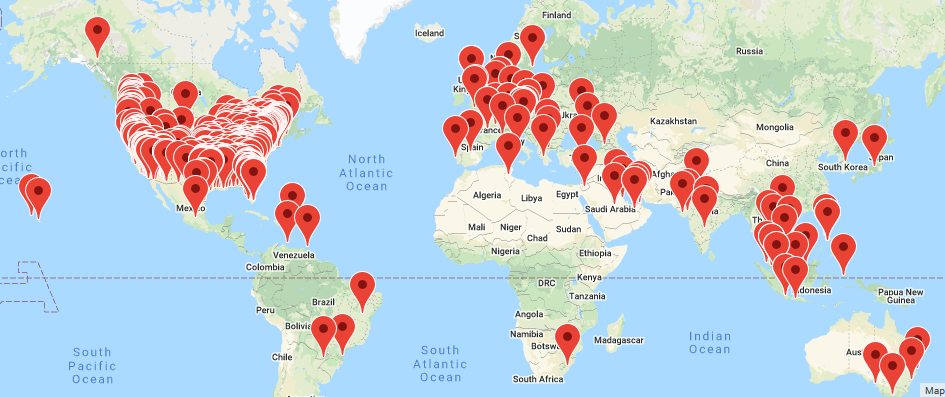
Fig Database's mapping system works in mulple different ways. It uses your zone selected at registration. It is then displayes in the following sections:
- Home page, to show the number of registered members from around the world (displayed on the image above).
- In the variety detail pages, under the tab "Growing Locations" you can see on the map, Fig Database members and location in which a variety is being grown (when you add a variety to your "Collection" list, it displays your username and location in the map.
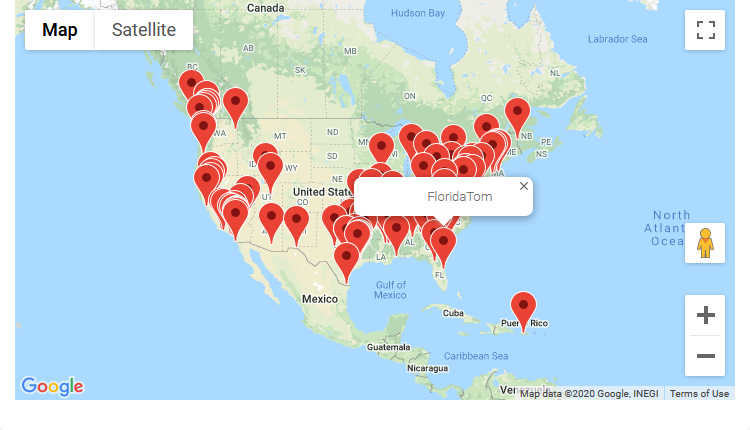
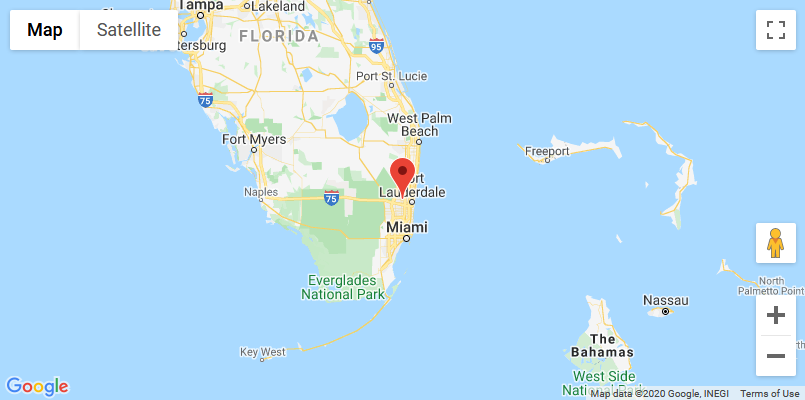
- On a user's profile page, as per location of the user. You can see a Fig Database member's approximate location.
- More Into Your Catalog
This is just another one of Fig Database's special feature. You now have a special catalog so that you can add specific information to any of your fig varieties saved under your "My Collection" list.
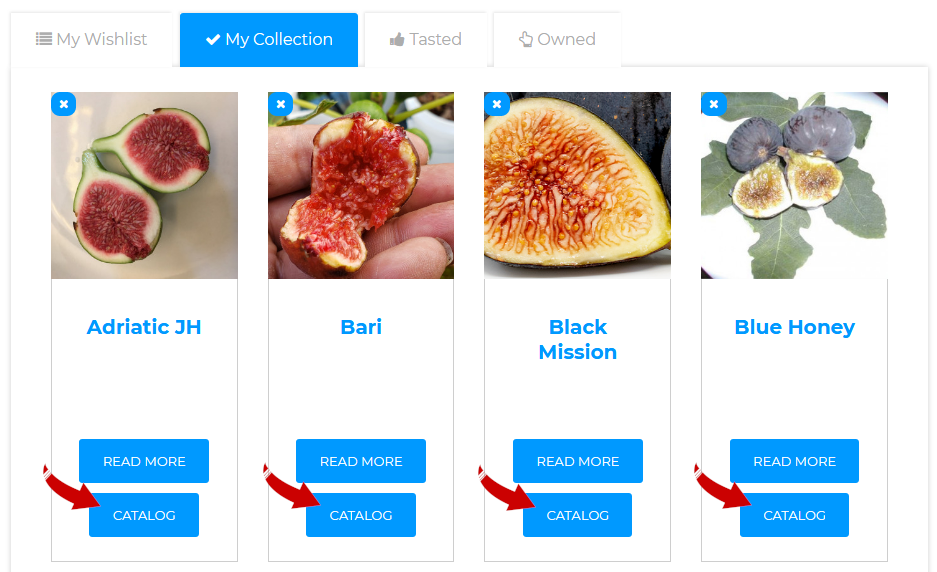
Once you click on the varieties catalog button, it will open the catalog form for you to enter and record all of your information. Many useful fields have been provided to you for good record keeping. Do not forget to click on the UPDATE CATALOG to save your entry.

Notice also that within this form, you have the option to print or share.
- Other Useful Abbreviations and Acronyms
Please have a look at Fig Database's Glossary
- Predefined Fig Variety Searches
These are predefined searches used often by other members of the community. These are not complete and will changed as more information is entered and or added to the database. If you have a search request, please send us a message with your search list or suggestions.
- Recommended Books
- Plant Propagation, By Alan Toogood
- Grow a Little Fruit Tree By Ann Ralph
- Grow Figs Where You Think You Can’t by Steven Biggs
- Fruitipedia - An online fruit encyclopedia
- Under The Fig Tree by Sue Simpson
- Under the Fig Leaf by Sherri P. Lee on Amazon
- The Fig: Its History, Culture and Curing: With Descriptions of the Known Varieties of Figs by USDA
- Fig Heaven: 70 Recipes for the World’s Most Luscious Fruit by Marie Simmons
- Gods, Wasps and Stranglers: The Secret History and Redemptive Future of Fig Trees by Mike Shanahan
- Fig Growing in the South Atlantic and Gulf States by USDA
- Figs: A Global History by David C. Sutton
- A Guide to Growing Figs under Glass by David Thomson
- Fig Culture. Edible Figs: Their Culture and Curing by Gustav Eisen
- Repository Of Fig PDF Files
If you come across a PDF file that is not included in the Fig Database or the list below, please contact me to have it included.
- A Pathogen Of Ficus Carica - Florida
- A review on Ficus palmata (Wild Himalayan Fig)
- Belleclare Nursery Final List You may also be interested in the Ethnic Figs in America by Ray Givan
- Bordissot Negra
- California Agricultural Extentions Service
- Caprifigs and Caprification by Ira J. Condit
- Caracteritzaciode cultivars de figueraa Mallorca
- Caracterizacion de variedades de higuera cultivadas en Extremadura
- Case Study: Estahbanat Rainfed Fig System - Iranian Agricultural Heritage System -
- Cesi Fig (ÇEŞİTLER)
- Champagne Fig
- COLECÇÃO DE FIGUEIRAS DO ALGARVECARACTERIZAÇÃO MORFOLÓGICA DE VARIEDADES (ALGARVE FIG TREES COLLECTION MORPHOLOGICAL CHARACTERIZATION OF VARIETIES)
- Comparing the genetics of Black Madeira KK, Figo Preto and Craven’s Craving
- Globally Important Agricultural Heritage Systems (GIAHS)
- Desarrollo del cultivo del higo (Ficus carica) para consumo fresco y procesado, como una alternativa de diversificación para el sector agrícola.
- Directrices Para La Ejecucion Del Examen De La Distincion, La Homeneidad Y La Estabilidad
- Discover Figs by Wallace P.
- Dried Figs
- Ecole Nationale Superieure Agronomique
- El cultivo de la higuera
- Estahbanat Rainfed Fig System-Iranian Agricultural Heritage System
- Fig biology by J. Galil
- Fig Characteristics Useful in the Identification of Varieties by Ira J Condit
- Fig Culture in California by Ira J. Condit
- Fig Demonstration Plot Texas A&M AgriLife Extension Service - Hays County
- Fig Endosepsis: An Old Desease Still A Dilemma For California Growers
- Fig Genotype
- Fig Planting And Growing Tips
- Fig rust caused by Phakopsora nishidana in South Africa
- FIGS - Extension Fruit Specialists, Texas AgriLife Extension
- Figs - Study by: Akath Singh, Jai Prakash, P.R. Meghwal and S.A. Ranpise
- Figs - For Commercial and Home Production in Louisiana
- Figs in the Home Planting
- Figs in the Pacific Northwest
- Figs of the World - Campanière Page 1
- Figs of the World - Campanière Page 2
- Figs- University Of Kentucky
- Fig Tree Named Sequoia
- Fig Varieties: A Monograph (Condit, UC Davis)
- Fruit Spoilage And Diseases Of Figs
- FRUITS AND NUTS - Figs In The Home Planting.pdf
- Genetic structure and differentiation in cultivated fig (Ficus carica L.) Mallikarjuna K. Aradhya • Ed Stover • Dianne Velasco • Anne Koehmstedt
- Grow Your Own A Beginner's Guide to Rooting Figs By Rigo Amador
- Gulf Coast Fruit Study Newsletter
- Gustavus Augustus (Gustav) Eisen (1847-1940)
- HILGARDIA - A Journal of Agricultural Science - Condit, I.J. 1932 The structure and development of flowers in Ficus carica L
- FIG VARIETIES: A MONOGRAPH IRA J. CONDIT
- Home Fruit Production - Figs
- Home Garden Figs - Georgia
- In The San Joaquin Valley - Calimyrna Variety - 2005
- Italian Numbered Figs Found At Bay Area Scion Exchanges
- James Robin Sr.
- Jim Kamas, Monte Nesbitt & Larry Stein Extension Fruit Specialists, Texas AgriLife Extension
- Journal of the American Society for Horticultural Science - Selection of the Most Discriminating Morphological Qualitative Variables for Characterization of Fig Germplasm
- Localizacion De Variedades Locales De Higuera
- Louisiana Figs
- LSU Gold Fig
- LSU Tiger Fig
- Mare de Déu
- O’Rourke, Champagne and Tiger Figs
- O'Rourke Fig
- O'rouoke - Champagne and Tiger Figs
- Overview Of An Ancient Fruit
- Plant Inventory #153 - USAD
- Problems Identifying Fig Varieties
- Problemas Fitosanitarios Asociados el Cultivo de Higuerilla en Colombia
- Proceso De Secado Y Prensado De Higos En Canarias
- Promising New Seedling Fig - Conadria
- Quality and physiology of two cultivars of fresh-cut figs in relation to ripeness, storage temperature and controlled atmosphere
- Sample Costs To Establish A Fig Orchard And Produce
- Quality and physiology of two cultivars
- Screening Diverse Fig Cultivars for Commercial Potential
- Seeds and plants imported during the period from September, 1900, to December, 1903
- Situal actual y perspectivas del cultivo de la higuera en España
- The Core Historical Literature of Agriculture (CHLA)
- The Fig by Ira J. Condit
- The Fig: Botany, Horticulture,and Breeding.pdf
- THE FIG: Its History, Culture, And Curing With A Descriptive CatalogueOf The KNown Varieties Of Figs. By Gustav Eisen
- The Fig: An Overview Of An Ancient Fruit
- The Fig - University Of Florida
- THE FRUIT MANUAL: The Fruits And Fruit Trees Of Great Britain.pdf
- The Gardeners Dictionary (Complete)
- The Gardeners Dictionary (Shortcut)
- The Improvement Of Quality In Figs
- The Incredible Edible Fig Presentation
- The J.C. Forkner fig-gardens recipes; how to serve figs in the home
- The Kadota Fig: A Treatise on its Origin, Planting and Care By W. SAM CLA" K Sulta na, Cal .
- The NAFEX FIG Page
- Third Biennial Report Of The Commissioner Of Horticulture Of The State Of California For 1907-1908
- Tree Training and Managing Complexity and Yield in Fig
- Universidad De Cuenca
- University of Florida
- University of Kentucky
- Variedades De Higuera
- Should I wrap my fig trees in the winter?
Whether or not to wrap your fig trees in the winter depends largely on the climate in which you are growing them. Here are some guidelines to help you decide and understand how to properly protect your fig trees during the colder months:
Considerations for Wrapping Fig Trees:
-
Climate and Hardiness Zone: Fig trees are generally hardy in USDA zones 7-11. If you live in a region where winter temperatures regularly drop below 20°F (-6°C), wrapping your fig trees can help protect them from cold damage.
-
Variety: Some fig varieties, such as 'Chicago Hardy' and 'Brown Turkey,' are more cold-hardy and can withstand lower temperatures. Even these varieties, however, may benefit from winter protection in extremely cold climates.
Benefits of Wrapping:
-
Protection from Frost: Wrapping helps shield the tree from frost and freezing temperatures, which can damage or kill the tree.
-
Wind Protection: It also protects the tree from cold winter winds that can cause desiccation (drying out) of the branches and bark.
-
Rodent Protection: Wrapping can deter rodents and other animals from gnawing on the tree’s bark during winter.
How to Wrap Fig Trees:
-
Prune the Tree: Before wrapping, prune the fig tree to remove any dead, diseased, or crossing branches. This makes wrapping easier and helps the tree conserve energy.
-
Mulch the Base: Apply a thick layer of mulch (straw, leaves, or wood chips) around the base of the tree to insulate the roots and retain moisture.
-
Wrap the Tree:
-
Burlap or Landscape Fabric: Use burlap or landscape fabric to wrap the tree. These materials allow the tree to breathe while providing insulation. Avoid using plastic, as it can trap moisture and cause fungal issues.
-
Wrap Layers: Start at the base of the tree and wrap upwards, overlapping each layer slightly. Secure the wrap with twine or zip ties.
-
Additional Insulation: For extra protection, you can place a layer of straw or leaves between the tree and the wrapping material. Another method is to wrap the tree with an old blanket or quilt first, followed by burlap.
-
-
Cover the Top: If your winters are particularly harsh, consider covering the top of the tree as well. You can use a cardboard box or construct a simple frame covered with burlap to protect the upper branches.
-
Ventilation: On milder winter days, if feasible, temporarily open the wrapping to allow air circulation and prevent moisture buildup.
Unwrapping in Spring:
-
Timing: Once the danger of frost has passed and temperatures begin to rise in the spring, carefully remove the wrapping to allow the tree to resume normal growth.
-
Inspect the Tree: Check for any signs of damage or disease and address any issues promptly.
-