




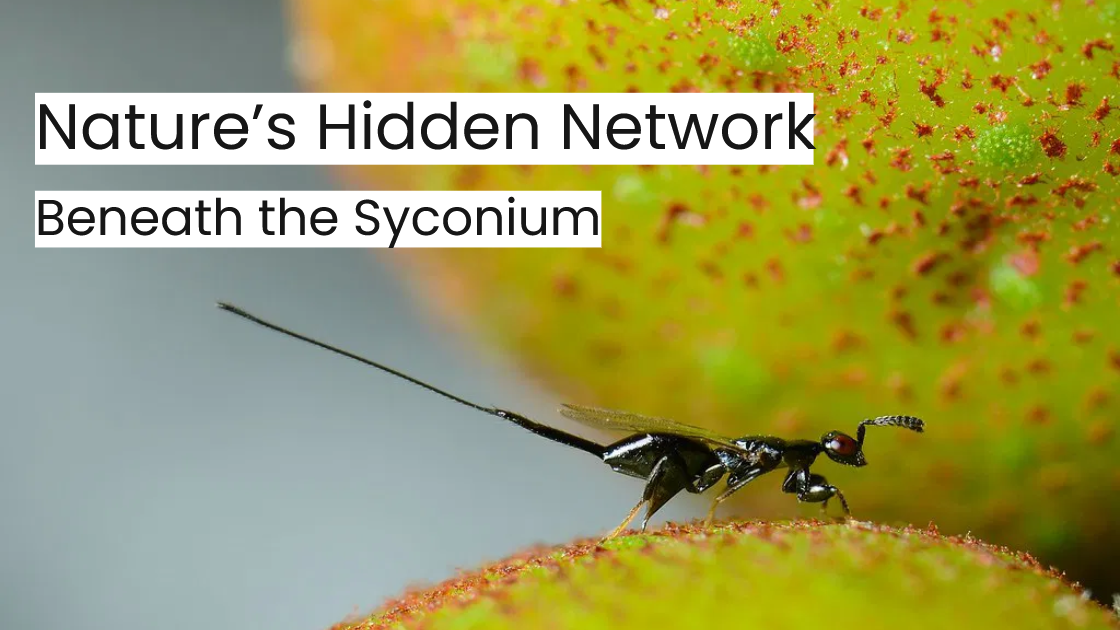
Fig Wasps and Species Richness: Nature’s Hidden Network Beneath the Syconium
Rigo • 22 Jan 2026 • 693When we think about fig trees, most of us picture lush leaves, sweet fruit, and memories of tasting that first ripe fig of the season. But beneath the surface of every fig “fruit” — which is itself a hollow structure called a syconium — lies one of nature’s most astonishing and intricate partnerships. The players aren’t just the tree and the fruit, but hundreds of tiny fig wasp species that have co-evolved with figs over tens of millions of years to make reproduction possible.
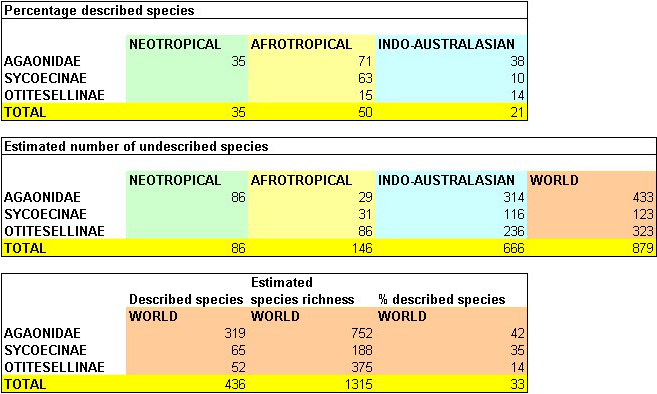
Fig wasps (a broad group of tiny chalcid wasps in the superfamily Chalcidoidea) aren’t the wasps that sting humans. Instead, they are specialized insects uniquely matched with fig trees. Around the world, scientists have described roughly 640 species of fig wasps, and that likely represents only 20–30% of the true diversity. Each species typically partners with a particular fig species in a mutualistic relationship — meaning both parties benefit. The fig provides a secure home and nutrients for the wasp’s developing larvae, while the wasp carries pollen from one fig to the next in a process that allows the fig tree to produce viable seeds.
What makes fig wasps and fig trees so extraordinary is the exclusivity of these relationships. In many cases, a single species of fig wasp will be the only pollinator for a specific fig species, and vice versa. This means that fig ecology isn’t just about figs — it’s about the entire web of life that depends on these tiny insects. The high degree of host specificity — where one wasp mates and lays eggs only in one kind of fig — has fascinated biologists for decades and stands as a classic example of co-evolution in action.
But this story goes deeper than just “one fig, one wasp.” Research suggests that there may be hidden diversity, with many fig wasp species still undescribed by science. Estimates based on evolutionary studies indicate that real numbers could be much higher than current records show. That hidden richness highlights how little we still truly understand about the microscopic architects behind fig reproduction.
For fig collectors and growers, this diversity isn’t just an academic curiosity — it has real implications. Certain fig types, especially those outside the common parthenocarpic cultivars (which don’t need pollination, like most supermarket figs), rely on local fig wasps to produce fruit. In ecosystems where fig wasps are absent, these figs will often abort before ripening. Understanding how many wasp species exist, where they live, and how they interact with specific fig trees can help growers predict whether a variety will fruit in a given location.
Beyond pollinators, fig wasp communities also include non-pollinating species and parasitoids, which may interact with figs in other ways — some gall flowers or affect the reproductive success of pollinators. These additional players further enrich the ecological tapestry woven around fig trees.
In essence, fig wasp species richness underscores how much complexity is hidden behind the simple pleasure of biting into a fig. For serious collectors, understanding this hidden network — and respecting the ecological elegance that makes fig reproduction possible — deepens appreciation for every variety in the orchard. Fig trees don’t stand alone. They are nodes in a global tapestry of life, spun in part by the tiniest of wasps, each with its own story beneath the syconium.