




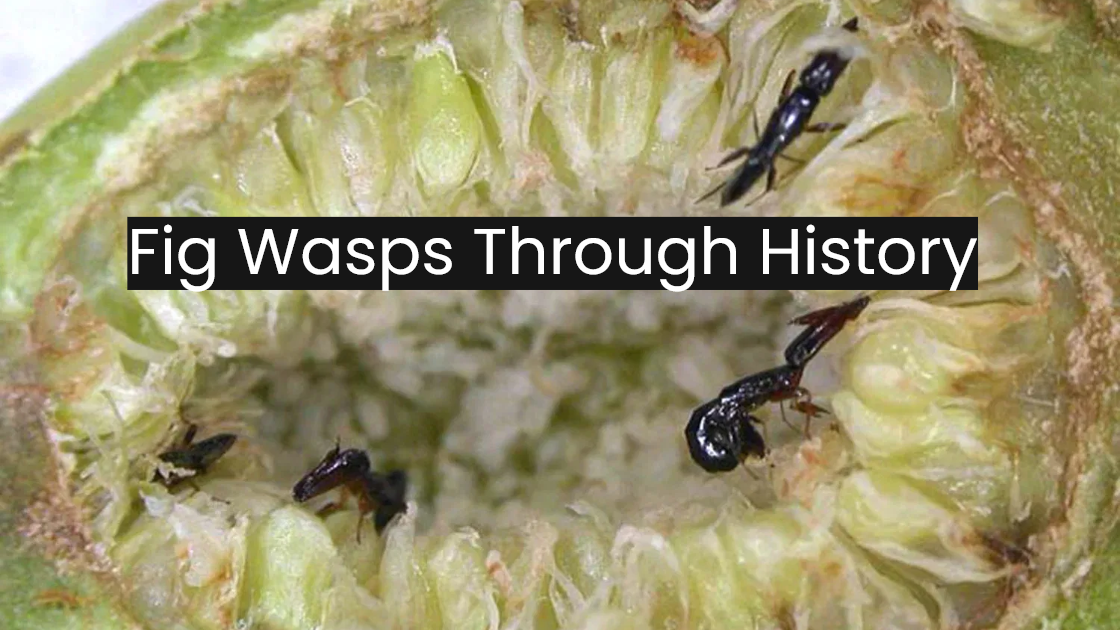
Fig Wasps Through History: The Tiny Insects That Shaped Fig Cultivation
Rigo • 22 Jan 2026 • 668When fig growers talk about fruit flavor, rare cultivars, or breba crops, the conversation almost never includes insects. Yet for much of fig history, an insect smaller than a grain of rice quietly dictated whether orchards thrived or failed. Long before microscopes, DNA sequencing, or university field stations, farmers across the Mediterranean noticed something strange: some figs only ripened when wild caprifigs grew nearby. Others stubbornly dropped their fruit if these mysterious trees were absent. Centuries passed before the true cause was understood, but the fig wasp had been shaping fig agriculture all along.
Ancient civilizations cultivated figs thousands of years ago in regions stretching from modern-day Turkey and Greece through the Levant and North Africa. Writings from classical authors hint that growers already recognized the importance of wild figs in fruit production, even if they had no idea insects were responsible. Greek and Roman farmers practiced a technique later called caprification, hanging branches of wild figs in cultivated orchards to ensure good crops. The logic wasn’t scientific in the modern sense, but it was effective. Inside those wild figs lived fig wasps, unknowingly performing the pollination work that allowed certain fig types to mature.
For collectors today, that historical detail is more than trivia. It explains why some fig varieties behave so differently from others and why certain traditional orchards were tied so closely to local ecosystems. Long before figs were traded globally as cuttings in padded envelopes, entire agricultural systems depended on a naturally occurring insect that no one could see at work.
The scientific unraveling of this mystery began in earnest in the seventeenth and eighteenth centuries, when European naturalists started dissecting figs and observing tiny insects emerging from their interiors. At first, the relationship baffled researchers. Were the wasps parasites? Were they damaging the fruit? Or were they simply hitchhikers? It wasn’t until the nineteenth century that botanists and entomologists firmly demonstrated the mutualistic relationship between figs and their pollinating wasps, showing that the insect’s life cycle unfolded entirely within the fig while simultaneously fertilizing the tree’s flowers.
One of the most dramatic historical chapters unfolded in California in the late 1800s and early 1900s, when growers attempted to establish Smyrna-type figs for commercial production. Trees grew beautifully but refused to ripen fruit. The missing ingredient turned out to be the fig wasp. After years of experimentation, agricultural officials successfully introduced caprifigs carrying wasps, finally allowing Smyrna figs to set seed and launch what became a major dried-fig industry. It was one of the earliest large-scale agricultural projects built entirely around managing a specific insect–plant relationship.
From a collector’s perspective, this story adds an extra layer of reverence to every fig tree in the yard. The difference between a productive orchard and a disappointing one once depended on an insect no one could intentionally cultivate or control. Today, when fig enthusiasts debate pollination zones, caprifigs, or wasp presence in new regions, they’re continuing a conversation that stretches back thousands of years.
Understanding the historical role of fig wasps also helps temper modern hype. Figs didn’t spread across continents because of clever marketing or trendy names. They spread because farmers slowly learned to work with nature rather than against it. The fig wasp wasn’t discovered in a laboratory — it revealed itself over centuries of observation, trial, failure, and patience.
For Fig Database readers and serious fig lovers alike, the history of fig wasps is a reminder that this hobby is rooted in ancient systems far older than any backyard orchard. Every successful Smyrna fig, every seeded fruit, every thriving wild Ficus is part of a lineage shaped by tiny pollinators doing the same work they’ve done for millions of years.