Fig Wars: The Clone Wars of Cultivars
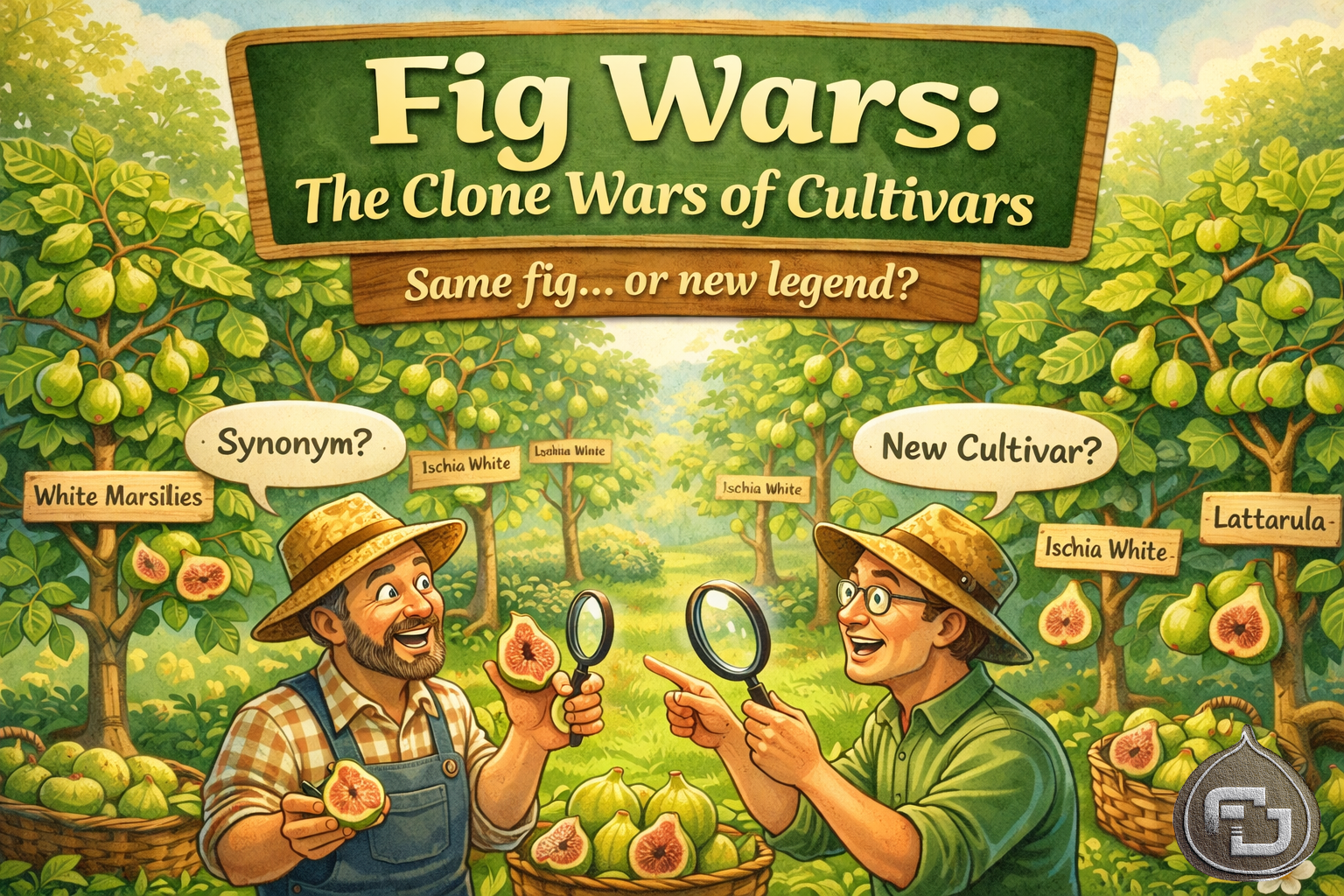
Rigo • 23 Jan 2026 • 473If you’ve spent more than five minutes in a fig forum, you’ve probably seen it happen. Someone posts photos of a gorgeous ripe fig, another grower chimes in with “Looks like a synonym of X,” and suddenly twenty people are debating leaf lobes, ostioles, pulp color, and whether a particular tree is a true cultivar or just a renamed clone. Welcome to the Clone Wars of fig collecting, where passion runs high, screenshots are zoomed in until pixels cry for mercy, and everyone is absolutely certain they’re right.
At the heart of most fig arguments is a simple reality: figs are usually propagated vegetatively, meaning new trees are grown from cuttings rather than seed. That makes most cultivated figs genetic clones of an original plant discovered decades or even centuries ago. When that same clone travels across countries and generations, it often picks up new local names, becoming what collectors call a synonym. Sometimes those names stick. Other times they spawn endless debates about which name is “correct,” who introduced it, and whether the fig deserves a premium price tag.
Things get even messier when a tree throws a sport or mutation. A branch might suddenly produce fruit with a slightly different skin color or ripening time. Is that a new cultivar? Or just a quirky limb that will revert next season? Some growers rush to name and distribute these oddities, while others insist on years of observation before recognizing anything as truly distinct. That tension between excitement and caution fuels half the arguments in fig circles, and honestly, it’s part of what makes the hobby so entertaining.
Collectors also love chasing strains — trees that share a name but show subtle differences in vigor, cold hardiness, or flavor intensity. One person’s version of a famous fig might outperform another’s in a cooler climate, leading to speculation about whether they’re really the same plant at all. Add in environmental factors like soil, heat units, irrigation, and pruning style, and suddenly two genetically identical trees can produce fruit that looks and tastes surprisingly different. That’s when accusations of mislabeling start flying and photo comparisons multiply like fig cuttings in spring.
Pollination adds another layer of chaos. In regions with a fig wasp and nearby caprifigs, seeded fruit can look dramatically different from parthenocarpic figs grown without pollination. Seed crunch, pulp color, even sweetness can shift enough to make seasoned growers question whether they’re seeing a different variety altogether. Toss that variable into the clone wars and you’ve got a recipe for year-long threads and passionate late-night typing sessions.
What keeps this from turning into complete madness is careful documentation and community-driven reference sites like Fig Database, which focus on preserving known histories, recording introductions, tracking alternate names, and encouraging side-by-side trials instead of hype. When collectors slow down, fruit multiple seasons, and compare notes across climates, the fog starts to lift. Some “mystery” figs turn out to be old classics under new names. Others really do prove distinct enough to earn their place in collections.
In the end, the Clone Wars aren’t a bad thing. They’re proof that fig collectors care deeply about accuracy, history, and protecting newcomers from paying premium prices for something already growing in half the neighborhood. The debates may get loud, but they also push the hobby forward. Every heated thread about leaf shape or ostiole size is another step toward understanding just how complex — and endlessly fascinating — cultivated figs really are.
Comments 0
Leave a comment
Please log-in to comment