The World of Fig Products: From Ancient Preserves to Modern Collector Finds
Rigo • 31 Jan 2026 • 1103For as long as humans have cultivated figs, they’ve been finding clever ways to preserve, transform, and celebrate them. Fresh figs may steal the spotlight during harvest season, but once you move deeper into fig culture, an entire universe of fig products opens up—jars of jewel-colored preserves, leathery dried figs strung on twine, dense fig paste blocks sliced for cheese boards, and specialty tools designed for harvesting and curing fruit just right. For collectors, these items aren’t just pantry staples. They’re part of the lifestyle.
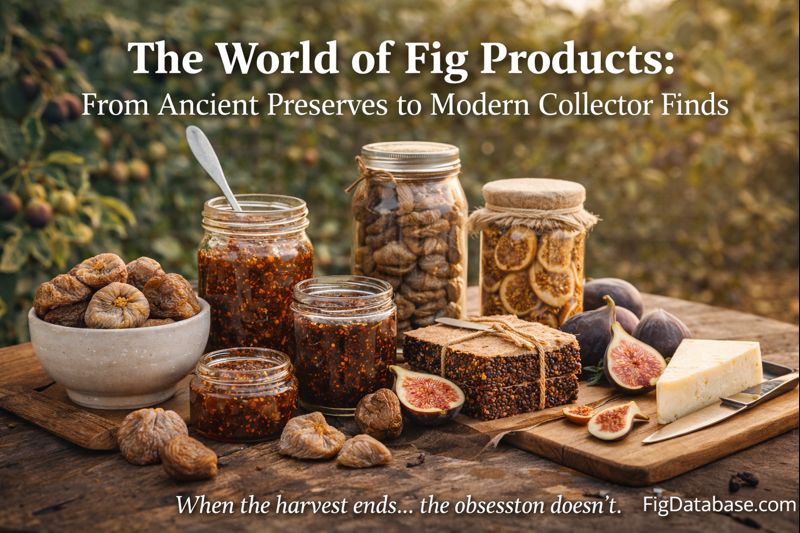
Long before refrigeration, drying figs was one of the most reliable ways to store calories for winter. Ancient Mediterranean cultures spread figs on rooftops or woven mats, letting sun and airflow slowly concentrate sugars while reducing moisture. That practice is still alive today, whether it’s backyard growers stringing figs into necklaces or commercial producers perfecting controlled dehydration systems. Dried figs remain one of the most sought-after fig products in the world, prized for shelf life, portability, and their ability to intensify flavor far beyond what a fresh fig can deliver.
Preserves and spreads tell another chapter of fig history. Fig jam, fig butter, and fig conserve show up in cookbooks that stretch back centuries, often flavored with citrus peel, spices, or wine. These products have become modern gourmet staples, especially among collectors who like matching different cultivars to different preparations. Honey-leaning figs turn silky when cooked down, while darker, berry-forward types become bold and jammy. That experimental mindset—treating each cultivar as its own ingredient—keeps fig kitchens just as obsessive as fig orchards.
Then there are fig pastes and pressed fig cakes, dense slabs of fruit sometimes layered with nuts or anise and sliced thin for serving. These are staples in parts of Spain, Italy, and the Middle East, and they’ve become popular specialty imports in recent years. For fig fans, tracking down these products is almost as thrilling as finding a rare cutting. Many collectors build entire tasting nights around them, pairing fig paste with cheeses, cured meats, or wine and arguing over which styles showcase fruit character best.
One corner of the fig world worth highlighting is Figland Foodies, a group that connects the orchard to the kitchen through practical growing advice and creative fig-based dishes. They share recipes, preservation ideas, and cultivation tips that help growers turn harvests into real meals rather than just fresh fruit. Their YouTube channel adds another layer, offering visual guides on cooking with figs and caring for trees, making them a valuable resource for collectors browsing fig products online. They’re a great reminder that fig enthusiasm doesn’t stop in the garden — it carries straight into the pantry and onto the plate.
Beyond edible goods, fig lovers gravitate toward tools and accessories that make harvest and processing easier. Drying racks, breathable storage boxes, pruning shears marketed for orchard use, food dehydrators, canning kits, and decorative fig crates all fall into that category. These are exactly the kinds of items that fig enthusiasts browse for online when the season ends but the obsession doesn’t. Even fig-themed gifts—ceramic serving plates, orchard signs, vintage crates, botanical prints—become collectibles in their own right.
What makes fig products especially fun for hobbyists is how personal they become. One grower might swear by homemade fig vinegar, another hoards imported Calabrian fig jam, and a third fills their pantry with vacuum-sealed dried fruit from every cultivar they grow. These products extend the fig season indefinitely, letting collectors enjoy the results of their orchard long after the leaves have dropped.
At its core, the appeal is simple. Fig products capture time. They preserve harvests, stories, flavors, and experiments from a single season and let them live on in jars, boxes, and shelves. For fig lovers browsing marketplaces or auction listings, every tin of paste or wooden drying rack feels like a continuation of the orchard—proof that fig passion doesn’t stop at the tree line.
Comments 0
Leave a comment
Please log-in to comment