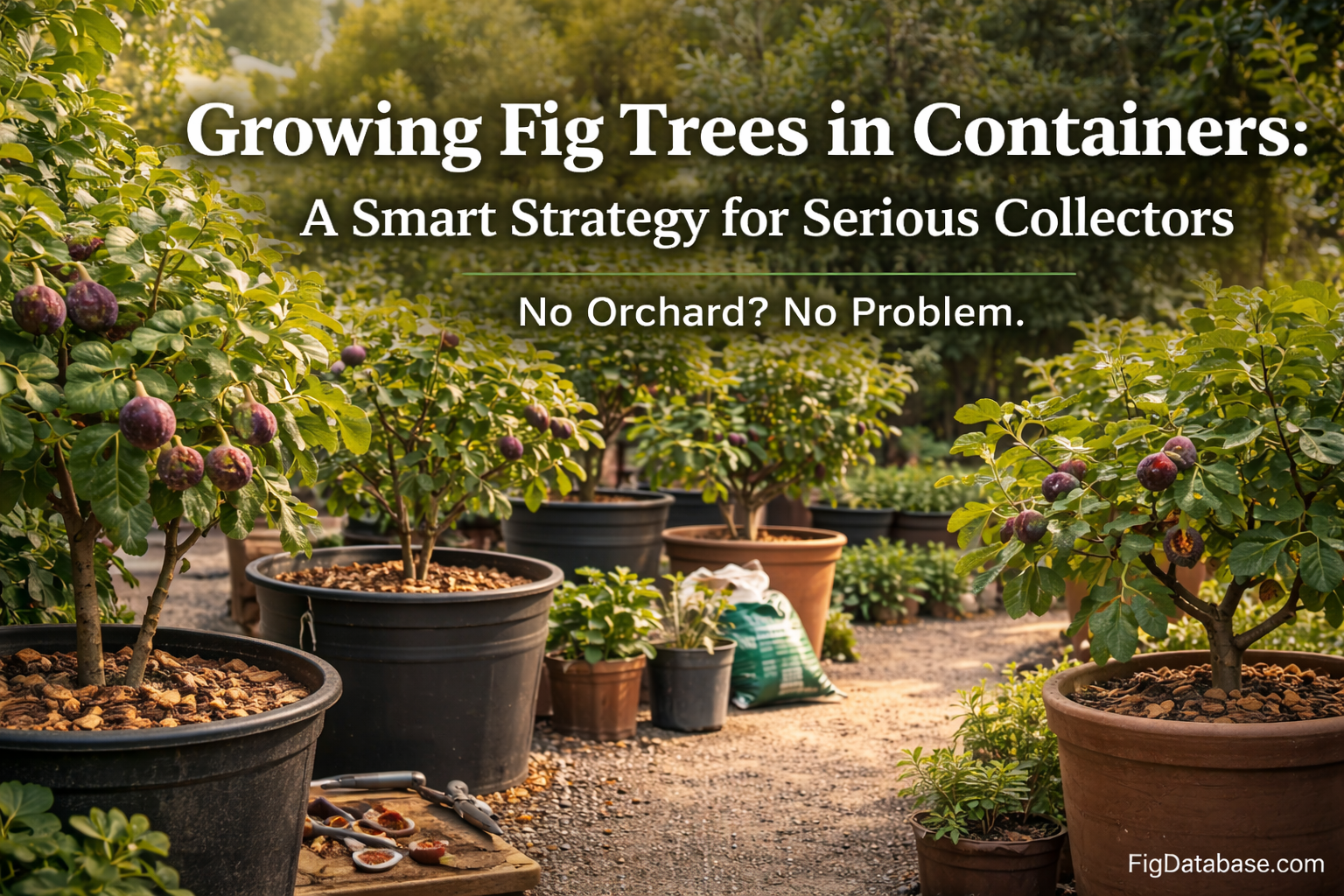
Growing Fig Trees in Containers: A Smart Strategy for Serious Collectors
Rigo • 12 Feb 2026 • 1494If you’ve ever walked through a serious fig collector’s yard, you’ve probably seen it — rows of pots, grow bags, and containers lined up like soldiers. For many growers, container cultivation isn’t a compromise. It’s a strategy.
Growing figs in containers gives you control. Control over soil composition, watering, root size, and even climate exposure. In regions with cold winters, container-grown figs can be moved into garages or protected areas during dormancy, preventing freeze damage. In hot climates, pots can be repositioned to avoid excessive sun stress. That flexibility alone makes container growing incredibly appealing.
One of the biggest advantages is root management. Fig trees are vigorous by nature. In-ground trees can grow aggressively, sometimes prioritizing vegetative growth over fruiting. In containers, restricted root space naturally encourages earlier fruit production. Many collectors notice that potted figs often focus on setting fruit rather than simply producing endless shoots.
Choosing the right pot size matters. A young cutting might begin in a one-gallon container, but serious growers often step up gradually to seven, ten, or fifteen-gallon pots. Too large too fast can lead to excess moisture retention and slow establishment. A well-draining soil mix is critical. Most experienced growers blend high-quality potting mix with perlite or pine bark fines to improve aeration. Good drainage prevents root rot and supports strong feeder root development.
Watering is where many beginners struggle. Container figs dry out faster than in-ground trees, especially in summer heat. Consistent moisture supports fruit swelling, but overwatering can lead to split fruit or root stress. Observing the weight of the pot and checking soil depth regularly becomes part of the rhythm of container growing.
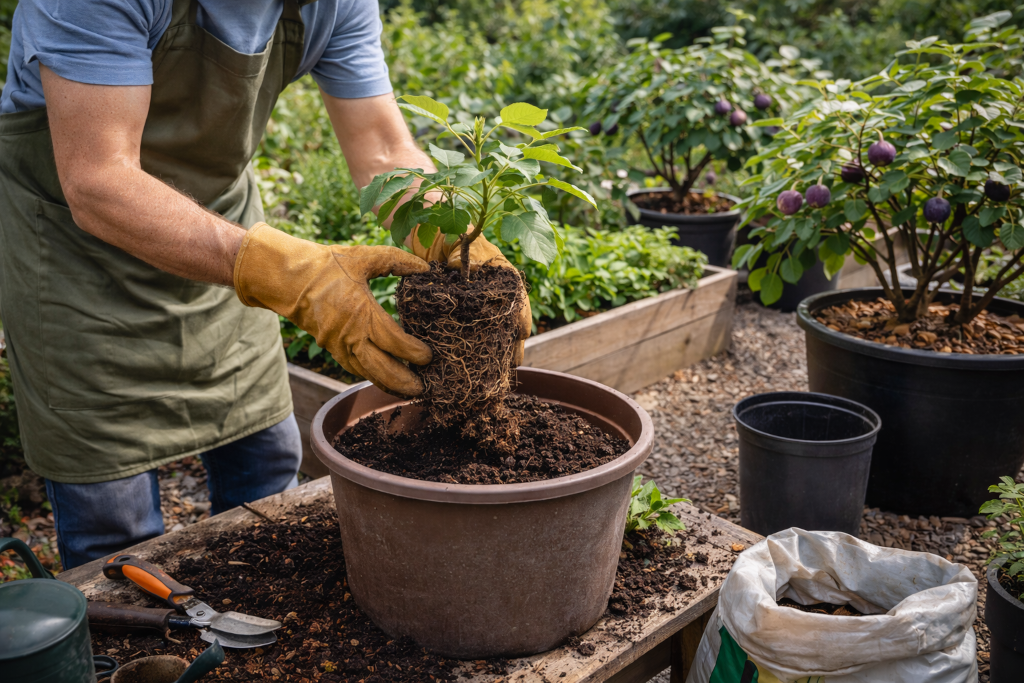
Root pruning is another powerful tool in the collector’s playbook. Every few years, growers may remove the tree from its pot during dormancy, trim the outer roots, refresh the soil, and return it to the same container. This keeps trees manageable and productive without constantly upsizing pots.
There’s also the practical benefit of mobility. When testing new cultivars, keeping trees in containers allows growers to evaluate performance before committing prime ground space. If a variety doesn’t meet expectations in flavor, productivity, or climate tolerance, it can be rotated out without major disruption.
Container growing also makes cultivar comparisons easier. Side-by-side trials become possible when trees are uniform in size and soil conditions. That’s especially valuable when investigating whether two varieties might be synonyms or slightly different strains. Keeping them in identical containers removes variables and makes comparisons more meaningful.
In the end, container fig growing isn’t second best. For collectors managing dozens of varieties, it’s often the smartest approach available. It allows experimentation, protection, and flexibility — all while producing beautiful, sweet fruit season after season.
Comments 0
Leave a comment
Please log-in to comment