




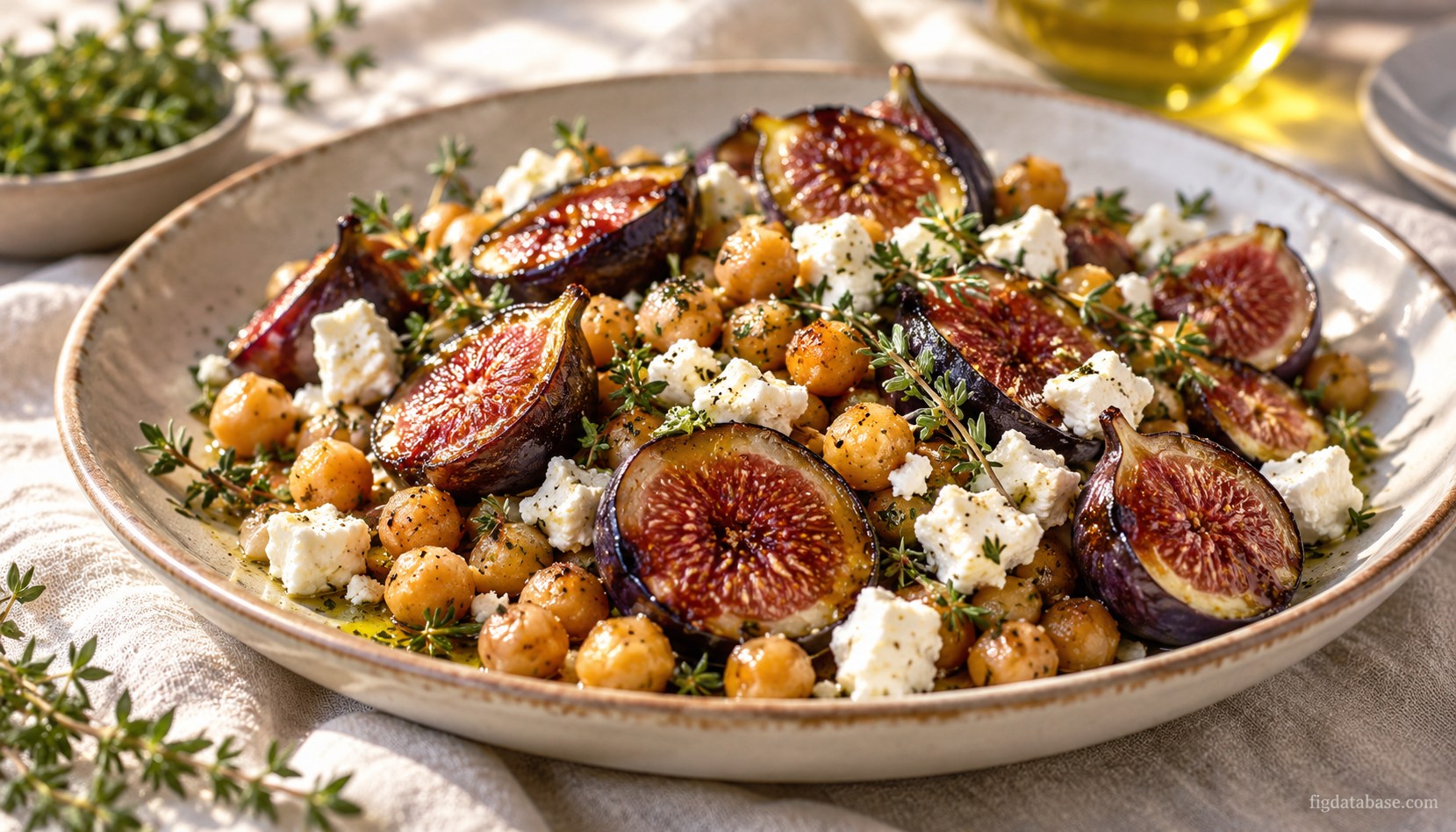
A Savory Fig Supper: Roasted Figs, Chickpeas, and Feta
Let ripe figs share the plate instead of turning every harvest into dessert.
Fig Database Editorial • 28 Oct 2026 • 6Not every bowl of ripe figs needs sugar, pastry, or a preserving pan. A savory supper can give the fruit a different job: soft sweetness beside something salty, earthy, and bright. Chickpeas provide substance, feta brings contrast, and lemon keeps the plate from becoming heavy. The idea is not to disguise the figs. It is to give them company that makes their own flavor easier to notice.
For two generous portions, start with six medium fresh figs, one drained and rinsed 15-ounce can of chickpeas, about three ounces of feta, two tablespoons of olive oil, a small lemon, and a few sprigs of thyme. Have black pepper and a little salt ready. These quantities are an original starting formula, not a claim of a kitchen-tested recipe; fruit size, ripeness, and oven behavior will affect the result.
Choose sound figs that are ripe enough to taste good but still hold together when cut. Very soft fruit can collapse quickly, while hard, immature figs will not become the same ingredient simply because the oven is hot. Rinse the figs gently under running water, pat them dry, trim tough stem tips, and halve them. Keep any fruit showing mold, decay, or an abnormal fermented smell out of the dish.
Heat the oven to 400 degrees Fahrenheit. Pat the rinsed chickpeas reasonably dry, spread them in a shallow baking dish, and toss with roughly half the oil, thyme leaves, and pepper. Start them in the oven for about ten minutes. The purpose is to warm them and begin drying the surface before the more delicate fruit joins them, not to promise a crisp snack-style chickpea.
Add the fig halves cut side up, tuck chunks of feta between them, and drizzle over the remaining oil. Return the dish to the oven for roughly ten to fifteen minutes, checking earlier if the figs are exceptionally soft or small. Look for warm fruit, softened feta, and juices beginning to collect, rather than waiting for every piece to take on the same color. Remove the dish before the figs lose all their shape.
While it cooks, combine a little finely grated lemon zest with a tablespoon of lemon juice. Spoon some over the warm dish after roasting, then taste a chickpea with a small piece of fig and feta together. Adjust the lemon, pepper, and salt in that combination. Feta varies in saltiness, and a bite of fruit alone does not tell you whether the complete plate needs more seasoning.
Serve with bread or cooked grain to catch the juices, keeping the accompaniments fairly plain. If you want a dairy-free version, leave out the feta and add a few olives after roasting, tasting before adding salt. Thyme can give way to a modest amount of rosemary, or fresh parsley can be added at the end. Change one strong flavor at a time so the fig remains part of the conversation.
Keep kitchen safety separate from judgments about flavor. Follow FDA guidance for handling produce, use clean utensils, and refrigerate leftovers promptly. The CDC's produce-safety guidance recommends refrigerating cut or cooked produce within two hours. This dish is meant for an ordinary meal, not shelf-stable storage. If you make it, note your fruit's condition and the timing that worked in your oven; those small observations are how a promising seasonal idea becomes your own dependable supper.