




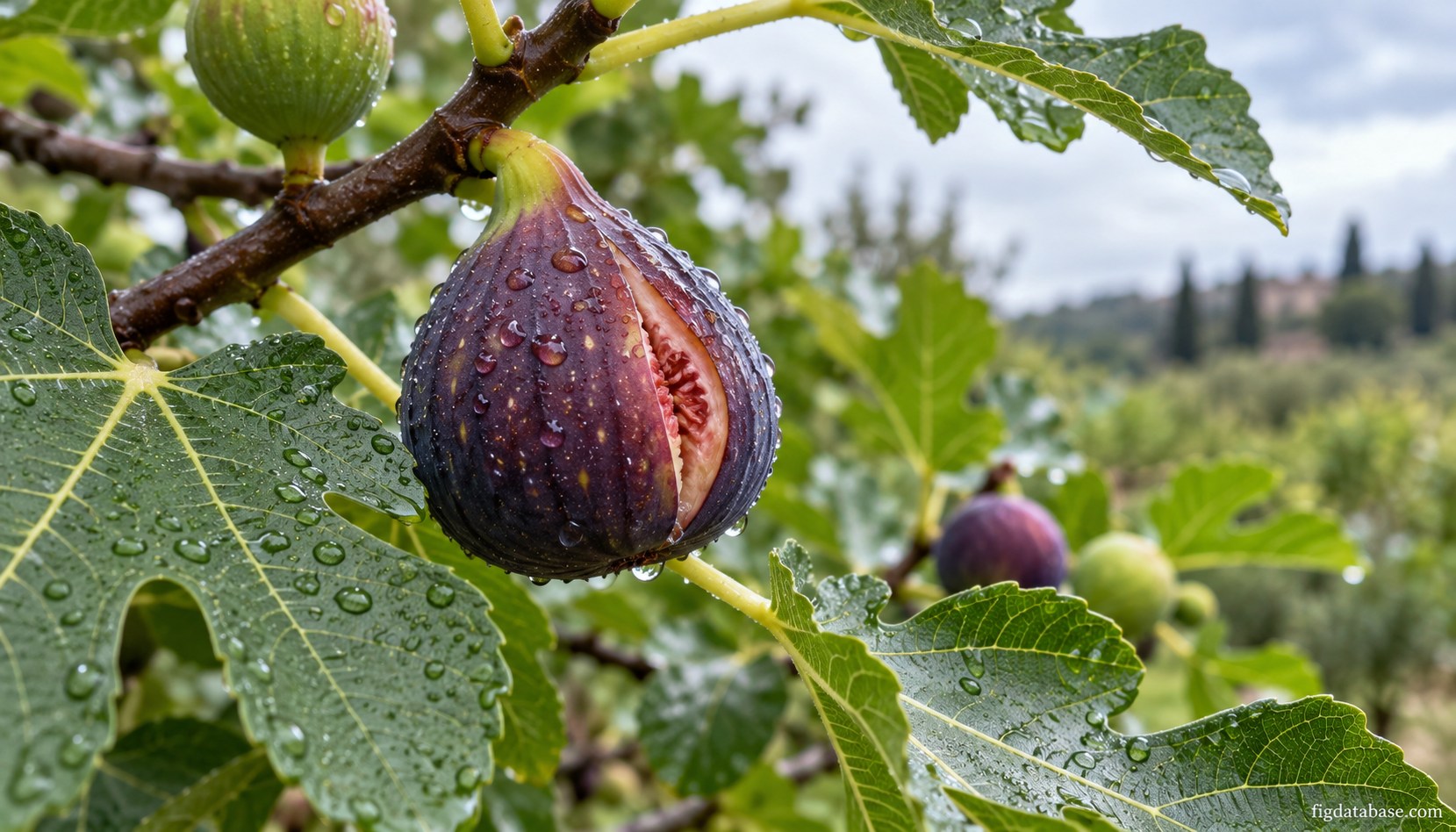
Why Figs Split After Rain, and What You Can Actually Change
Separate weather damage from the growing decisions you can control.
Fig Database Editorial • 28 Oct 2026 • 45A row of almost-ripe figs can look perfect in the evening and open along the skin after an overnight storm. The timing makes rain the obvious suspect, but the useful diagnosis is more specific than figs dislike water. Where the fruit opened, how ripe it was, and what happened before the storm all belong in the explanation. Those details also help separate useful changes from desperate ones.
Not all skin damage is the same. A split at the ostiole, the small opening at the fruit's end, differs from cracking along the side. Researchers working with fresh figs examined both forms of damage in a UC Davis study of cracking, splitting, and irrigation. Damaged fruit had poorer postharvest outcomes. Their results are a reason to treat an opened fig as more vulnerable, not merely less photogenic.
Water management can influence damage, but a commercial irrigation trial is not a universal instruction for a backyard pot. The same study found benefits from regulated deficit irrigation under its experimental conditions. That does not establish a safe household watering reduction for every cultivar, potting mix, climate, or tree size. Deliberately wilting a container tree just before a storm is not a dependable way to protect its fruit.
Instead, examine the pattern you already have. Does the pot swing from very dry to saturated? Does water drain freely, or does the container stand in a saucer that stays full? Are the damaged figs concentrated at the softest stage? Photograph representative fruit before removing it, and note where the split began. A consistent description is much easier to compare next season than a general memory of a bad week.
The first adjustment is usually steadier observation rather than a dramatic new product. Check moisture within the root zone rather than judging only the dry-looking surface. Make sure irrigation actually reaches the mix and excess water can escape. The goal is adequate, consistent care suited to the tree, not a fixed watering schedule copied from someone whose containers and weather are different.
Harvest decisions matter too. Sound figs that are genuinely ready can be picked before forecast rain rather than left merely to match an ideal photograph. Fruit that is still immature should not be counted as rescued simply because it was brought indoors early. Inspect the crop again after wet weather, separating sound fruit from leaking, sour-smelling, moldy, or otherwise spoiled fruit. Do not assume that cooking makes visibly spoiled figs acceptable.
Over time, compare varieties under your actual conditions. Record the number of sound and damaged figs in a harvest, rather than allowing one spectacular split to define a tree's reputation. Compare similar ripeness stages and crop types. A cultivar that performs well through your usual wet periods deserves attention, while a recommendation from a dry-summer region may need a local trial before it earns permanent space.
Be cautious about miracle solutions, especially claims that one spray prevents all cracking or that withholding water guarantees sweeter, intact fruit. A useful improvement can be modest: fewer losses, a more timely harvest, or clearer evidence that a particular tree is a poor fit for your site. You cannot turn off a storm. You can stop changing five things at once and give yourself a record that shows which practical changes were actually worth keeping.