




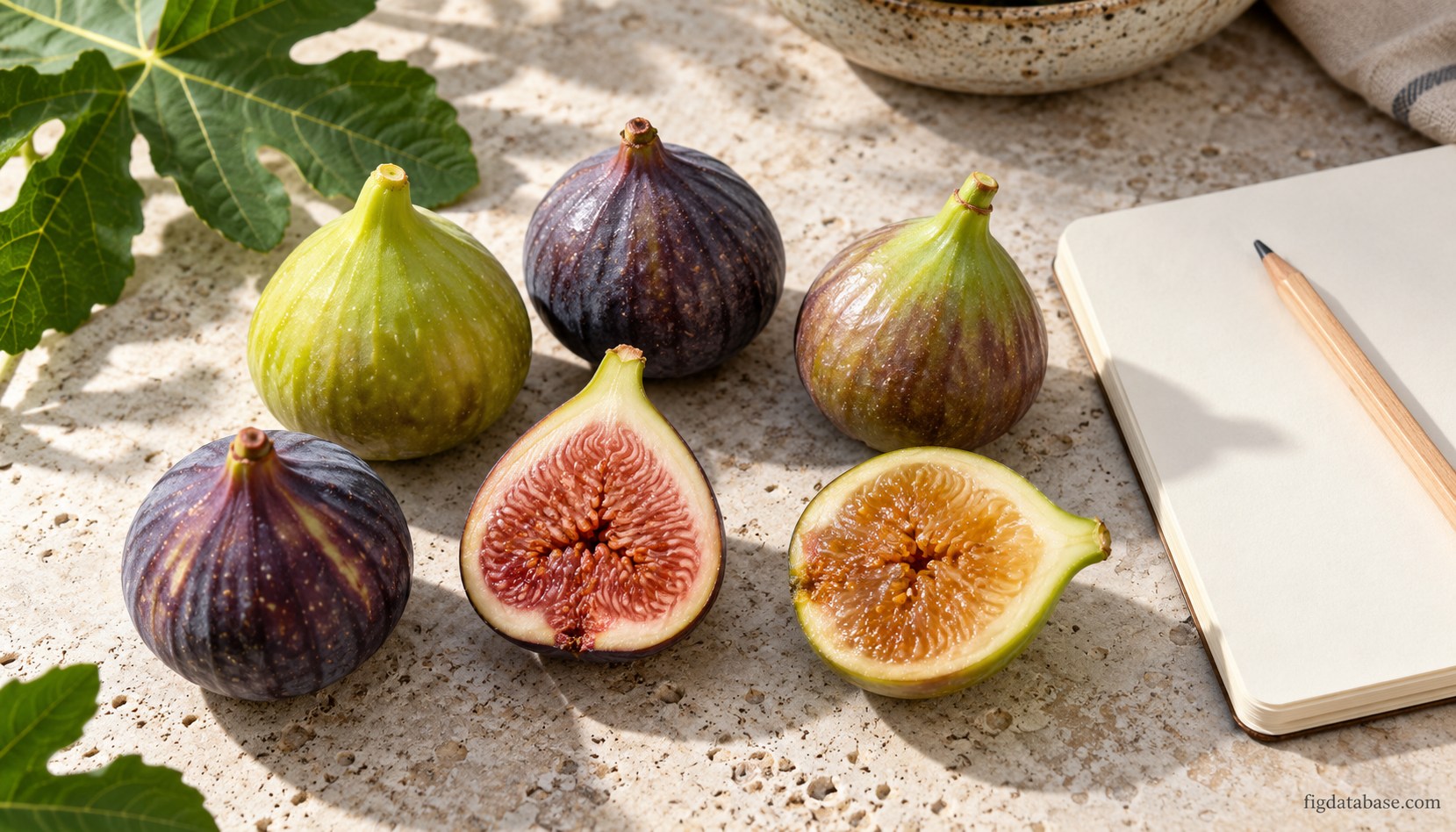
A Fig That Tastes Different Next Door: Comparing Varieties Fairly
A tasting note becomes more useful when the growing conditions travel with it.
Fig Database Editorial • 30 Oct 2026 • 10The fig you loved at a friend's house may disappoint on your own tree. That is frustrating, but it is not automatically evidence of a mislabeled plant or an exaggerated recommendation. A tasting compares fruit at a particular moment, not a variety stripped of its surroundings. The useful question is what changed between the two samples and how you could make the next comparison less ambiguous.
Begin with ripeness. Skin color alone is a poor universal referee because cultivars differ in appearance. UC Davis postharvest guidance uses color and firmness as maturity indicators and emphasizes harvesting fresh figs close to full ripeness. A firm fruit picked for travel is not a fair opponent for one softened on the tree. Record how readily it yielded to gentle pressure and whether the neck had begun to droop, without treating any single cue as infallible.
Then record which crop you tasted. Breba and main-crop fruit should have separate lines in your notebook. So should fruit from a young tree and an established one, or from a heavily shaded branch and an exposed branch. These distinctions do not prove a cause for every flavor difference. They prevent you from claiming that two samples were equivalent when you already know they were not.
A practical tasting sheet can stay very small. Date, tree label, crop, recent weather, texture, sweetness impression, acidity impression, and overall preference are enough to begin. Keep observations such as watery, chewy skin, or pleasantly tart separate from explanations such as too much irrigation. The observation is something you experienced; the explanation is a hypothesis you may need several harvests to investigate.
If you enjoy numbers, a handheld refractometer can add a soluble-solids reading, commonly expressed as degrees Brix. It does not measure flavor as a whole, and a high reading cannot summarize acidity, aroma, seed texture, or your personal preference. Take samples consistently, follow the instrument's instructions, and avoid reporting a precise-looking value as though it settles which variety everyone ought to grow.
For a side-by-side tasting, use a few sound fruits from each tree rather than choosing one unusually magnificent example. Serve them at similar temperatures, in similar pieces, and without announcing which is supposed to win. Simple coded plates can help reduce the pull of a fashionable name. If the fruit is scarce, write that the comparison involved only one sample rather than stretching a small tasting into a definitive verdict.
Repeat the exercise across the season and, when possible, across years. A variety that gives several satisfying harvests under ordinary conditions may suit you better than one that produced a single remarkable fig. Record failures as carefully as successes, including fruit you could not fairly assess. Missing data is more honest than filling a gap with a reputation borrowed from another grower's climate.
When sharing results, leave room for someone else's different experience. State your conditions and describe your preference rather than declaring a universal ranking. The Fig Variety Directory can help organize names and reference information, but your own repeated observations give the comparison its local value. A good tasting note lets the next reader understand what happened, decide how closely their garden resembles yours, and ask a better question before buying a tree.