




Picking a Fig at Its Best: From Tree to Refrigerator
The last few steps can protect the harvest you waited all season to taste.
Fig Database Editorial • 01 Nov 2026 • 7A fig can spend weeks on the tree approaching the point you want and only a short time at that point once picked. That imbalance explains why a small home harvest can taste so different from fruit chosen to travel. The challenge is not merely deciding which day to pick. It is protecting a soft, perishable fruit from the branch all the way to the plate.
Look at several cues together. A change toward the variety's mature color, a softer feel, and a drooping neck may help, but different figs express them differently. Iowa State's guide to hardy figs describes the importance of harvesting ripe fruit and handling it gently. Use your own repeated tasting to connect those visible signs with the condition you actually enjoy eating.
Do not expect a hard, immature fig to become equivalent to a tree-ripened one simply by waiting on a counter. Conversely, softness alone does not make damaged fruit desirable. Look for sound skin and normal aroma, and leave fruit with obvious decay out of the eating bowl. A photograph cannot reliably distinguish every cause of discoloration, so assess the actual fruit rather than comparing only its color with an online example.
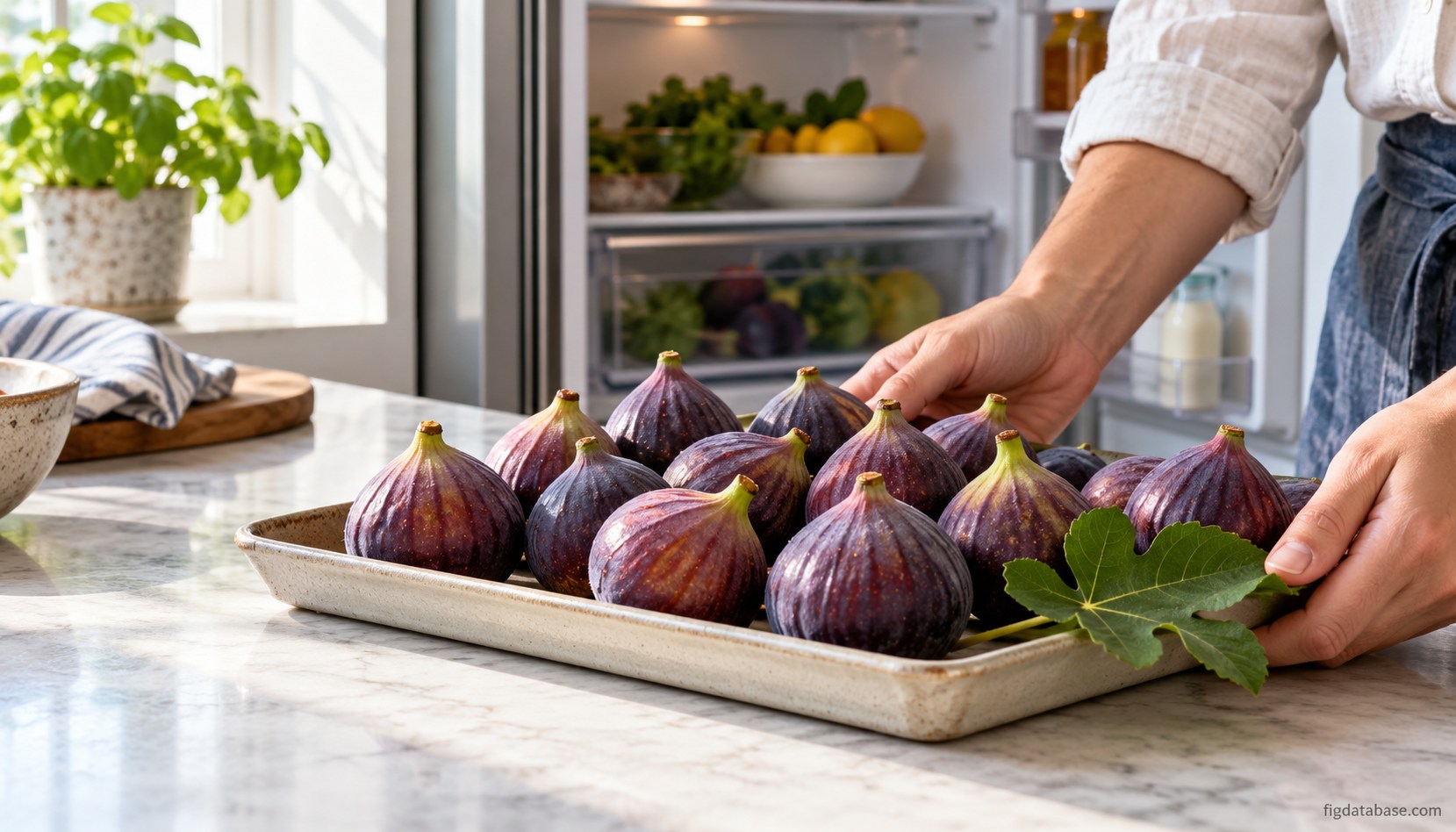
Carry a shallow container to the tree instead of collecting fruit in a deep bucket. Give soft figs space and avoid crushing lower layers under the rest of the harvest. Support the fruit gently as it comes away, without repeatedly squeezing each fig to reassure yourself that it is ripe. If the stem resists, pause and reassess rather than pulling hard enough to tear the skin or damage the branch.
Once inside, sort before storing. Keep sound fruit separate from fruit that is leaking or deteriorating, and plan to use the most delicate acceptable pieces first. UC Davis's fig postharvest guidance emphasizes the crop's perishability and the value of cooling. Commercial storage conditions are not a promise of a particular home shelf life; a crowded kitchen refrigerator and freshly handled fruit are a different situation.
For home use, refrigerate the harvest promptly rather than leaving it warm because it looks attractive on the counter. A shallow, protected container reduces pressure on the fruit. Inspect it regularly and use the figs soon, judging their condition each time. If you prefer the flavor closer to room temperature, take out only what you expect to serve rather than warming and chilling the entire harvest repeatedly.
Wash figs gently under running water just before preparing or eating them, and dry carefully. The FDA's produce-handling advice advises against soap and household detergents on fruit. Clean hands, utensils, and work surfaces matter too. Homegrown fruit still needs sensible handling; a familiar tree does not make every surface it touched in the garden or kitchen clean.
Finally, match the fruit to the moment. A few especially beautiful figs may deserve to be eaten fresh without any preparation beyond washing. Sound fruit that is softer can move quickly into a cooked dish, while a surplus needs a preservation method chosen before quality declines. Keeping a short harvest note can help next season, but the immediate reward is simpler: less bruised fruit, less waste, and a better chance of tasting the fig as you hoped it would be.