




Quarantine for a New Fig Tree: Protecting the Collection You Have
Make room for observation before a new arrival joins the rest of your figs.
Fig Database Editorial • 04 Nov 2026 • 12The most difficult place to put a new fig tree is somewhere away from all the others. Space is limited, the new plant looks healthy, and you want it beside its future neighbors. Yet a short pause at arrival can protect the time already invested in an established collection. Think of separation as an opportunity to observe, not an accusation against the person who supplied the tree.
Prepare the receiving area before opening the parcel. Keep the newcomer from touching other plants and avoid sharing drainage water or dirty tools between them. Retain its label and shipping information, and photograph the plant as received. Choose a place that still meets its basic needs; a stressed tree in a dark corner is harder to assess, and isolation should not become neglect disguised as caution.
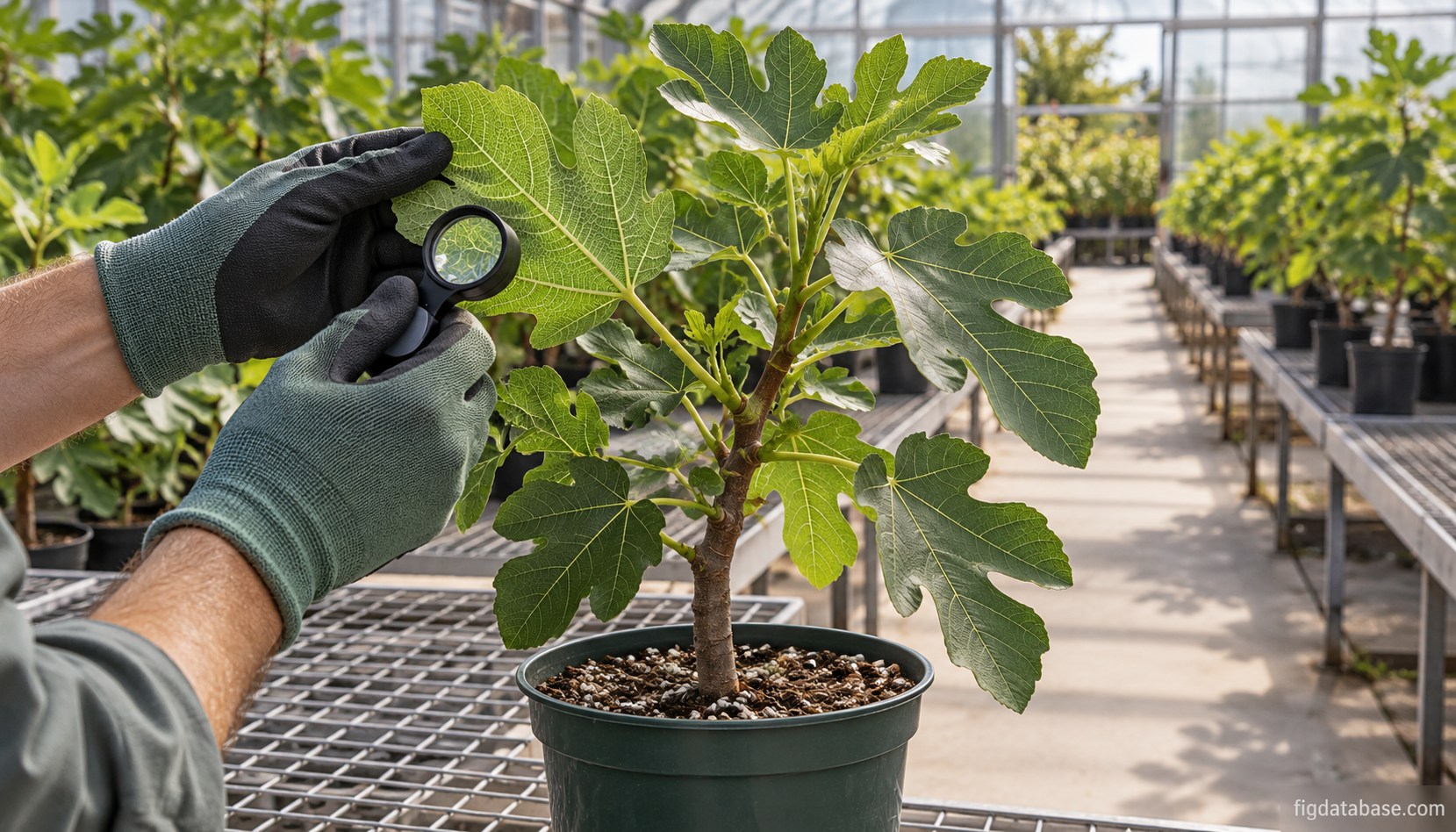
Inspect the leaves, stems, buds, pot rim, and accessible root zone. Look under leaves as well as at their upper surfaces. Sticky residues, clusters of insects, webbing, unusual swelling, or damaged growth deserve a closer look, but none should be diagnosed solely from a vague resemblance to an online picture. Note the location and extent of a symptom, and take clear photographs before applying anything.
General extension guidance supports isolating and monitoring incoming plants, although suggested observation periods vary. UC Integrated Pest Management's houseplant guidance emphasizes careful inspection and ongoing monitoring. That is a useful prevention principle for container collections, not a fig-specific certification protocol. A calendar cannot guarantee that an asymptomatic tree is free of every insect, mite, nematode, or disease.
Roots deserve particular caution because many problems are not visible in the canopy at arrival. UC IPM's fig nematode guidance explains that aboveground symptoms can be nonspecific and laboratory evaluation may be needed. Weak growth alone does not establish nematode damage, and a quick look at roots does not exclude it. Avoid scattering unfamiliar potting material around established trees while investigating a concern.
When something seems wrong, pause propagation and sharing from that plant. Keep its tools and runoff separate, seek advice from an appropriate extension or plant diagnostic service, and describe the history rather than offering only your suspected diagnosis. A good question includes when the symptom appeared, whether it is spreading, the growing conditions, and any treatments already applied. This helps distinguish an environmental problem from one that may move with plants.
Do not turn every arrival into a preventive pesticide experiment. Products differ in permitted crops, pests, application methods, and precautions; identification should come before treatment. Likewise, a visually clean cutting or a reputable source cannot remove every biological uncertainty. The aim is a defensible receiving routine, not a promise that a single dip, spray, or waiting period makes all material safe to distribute.
Buying and sharing also involves movement rules that a home observation area does not replace. For international material, consult the current USDA APHIS plant-entry guidance before arranging transport; requirements depend on the material and origin. For your own collection, record the observations that led you to move a tree out of separation. The quiet benefit is not a dramatic rescue story. It is noticing a problem while it still belongs to one identifiable arrival rather than an entire crowded bench.