




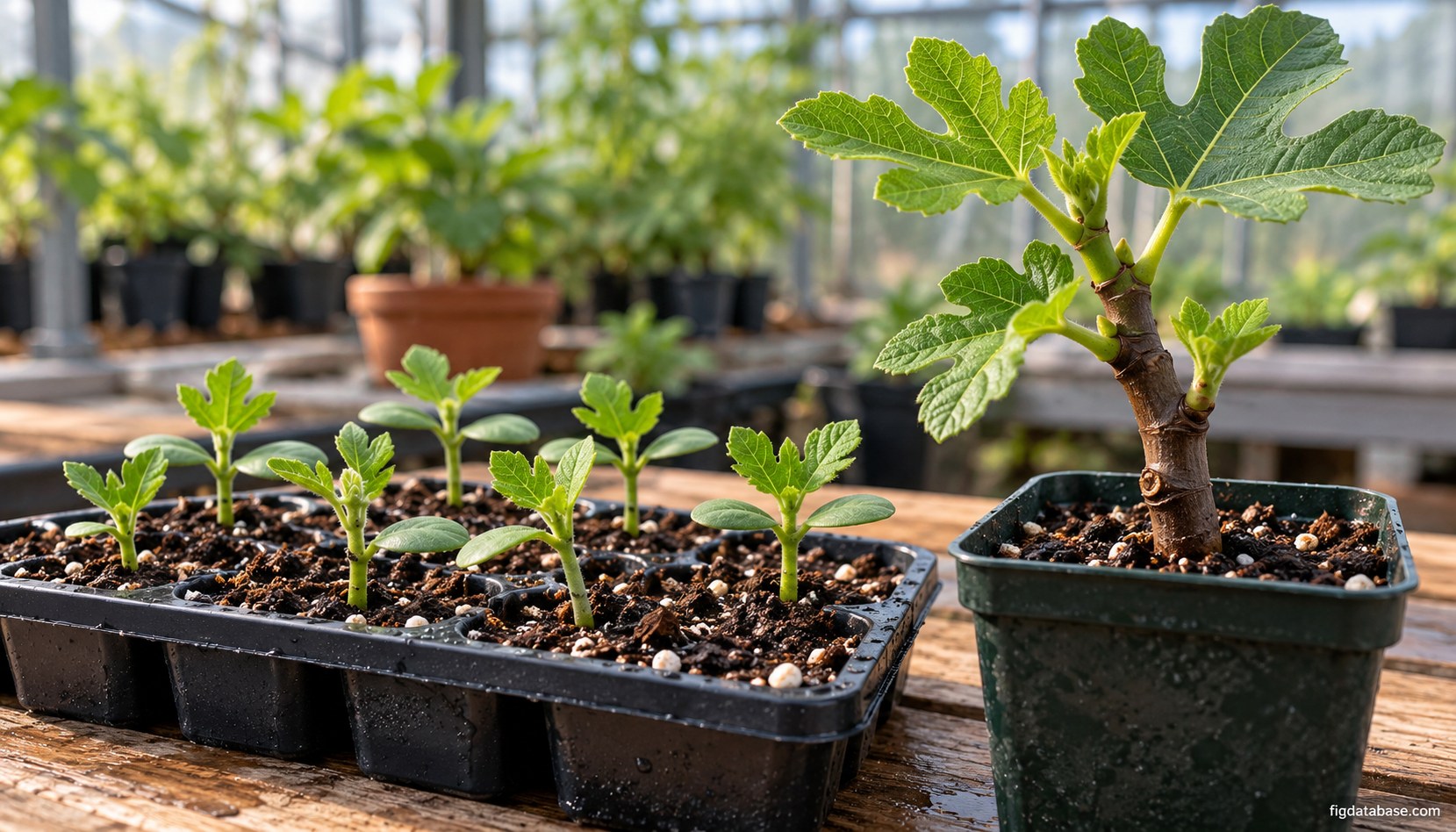
Figs From Seed: Why a Seedling Is Not a Named Variety
Grow a new plant with an honest name for what it is.
Fig Database Editorial • 12 Nov 2026 • 12A packet labeled with a famous fig variety can suggest a simple bargain: grow the seeds and obtain that tree. The missing distinction is between a seedling and a vegetatively propagated plant. Seeds offer new genetic combinations. A cutting is used to carry forward an existing plant's cultivar identity. Both can be interesting, but they answer different questions and should not be sold or labeled as though they were interchangeable.
Growing a fig from viable seed is possible. Obtaining an exact copy of the named fruit-bearing parent is not what sexual reproduction promises. Extension's response on propagating figs from seed makes that limitation explicit and notes that seedlings can include male trees as well as female fruiting trees. The edible figs someone hopes to harvest are therefore only one of several uncertain outcomes of a seed-growing project.
Even the presence of tiny seedlike structures in a fig does not guarantee that they will germinate. Common-type edible figs can develop fruit without pollination, a process called parthenocarpy. Fruit formation and production of viable, sexually formed seed are different events. The University of Georgia's home fig guide describes the distinction between common-type figs and figs with pollination requirements. Do not assume every grocery-store fig provides viable seed simply because it contains a crunchy interior.
That biological uncertainty should change the label before it changes the potting method. If you know the maternal source, a useful label says seedling from that source, with the collection and sowing dates. If the source is uncertain, record that uncertainty. Using the parent's cultivar name alone erases the distinction between the original cultivar and a new individual whose eventual characteristics are still unknown.
A seedling project is better approached as observation than as a shortcut to an expensive collection. Give each plant an identifier and preserve the connection to its seed batch. Photograph development and record which seedlings survive under your conditions. Avoid promising a fruiting date, flavor, pollination behavior, or hardiness before there is evidence. Seedlings from the same batch do not have to mature into equivalent trees.
For someone whose main goal is to grow a particular named variety, a correctly sourced cutting or rooted plant is the more direct route. Vegetative propagation does not make source verification unnecessary, and it does not guarantee perfect health or identical performance in every garden. It does, however, preserve cultivar identity in a way that raising a sexually produced seedling does not. The two kinds of uncertainty should not be confused.
If a seedling eventually fruits, describe what you actually observe over repeated seasons. Record whether fruit ripens, which crop you are seeing, and the local circumstances, including whether compatible pollination is available. A single appealing fruit is a reason to keep observing, not sufficient evidence for a sweeping new cultivar claim. Keep the original identifier even if you later give the plant an informal working name.
There is room for curiosity without borrowing a pedigree. A seedling can be worth growing because it is unknown, while a named cultivar can be worth preserving because its identity is traceable. Before sharing either through the Community Fig Exchange, describe the material accurately and keep the records with it. The most useful promise is not that every seed hides the next exceptional fig. It is that the next grower will understand what kind of plant they are receiving.
