




Breba or Main Crop? Choosing Figs Around Your Harvest Window
The right harvest is the one your growing season can finish.
Fig Database Editorial • 18 Nov 2026 • 8Two growers can recommend the same fig for entirely different reasons. One treasures the first fruit of summer; the other waits for a heavier crop later on. Neither account is necessarily wrong. Before buying another tree, it helps to ask which crop produced the fruit being praised and whether your garden can bring that crop to maturity. A variety name alone does not answer either question.
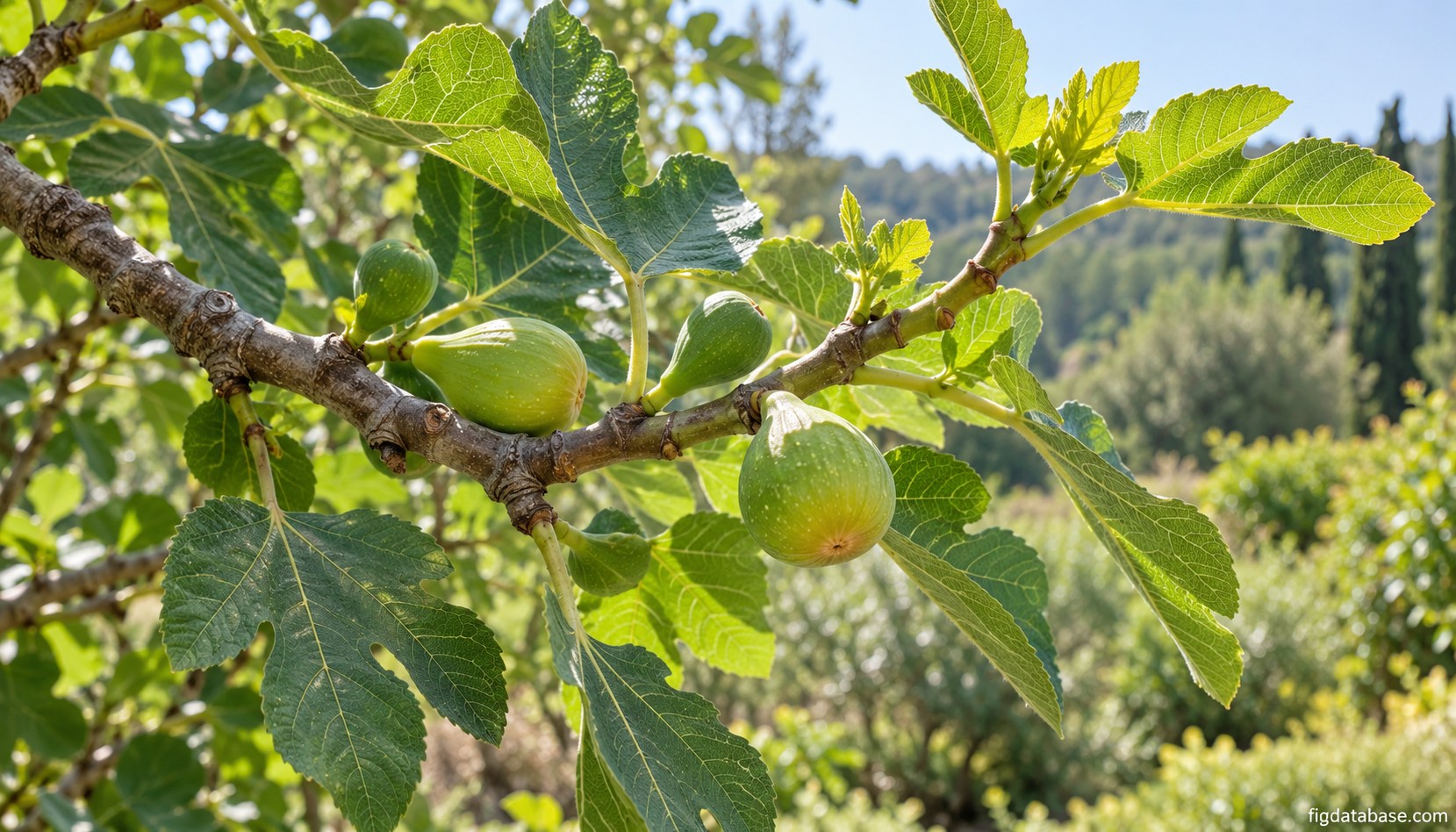
Breba figs develop on wood formed during the previous growing season. The main crop develops on the current season's shoots. That distinction, described in Penn State's winter protection guidance, has practical consequences: losing last year's branches can remove the framework carrying a potential breba crop, even when the roots survive and send up healthy new growth. Survival and an early harvest are different measures of success.
Nor does every variety make both crops equally well. Some produce little useful breba; others are valued specifically for it. A photograph of a large early fig should not be treated as a promise that the same tree's later fruit will have identical size, flavor, or timing. When reading a variety description, look for separate observations about the two crops rather than merging them into one imaginary average fig.
Start a local harvest calendar before making a shopping list. Write down when your established trees break bud, when the first figs ripen, and when cool weather begins leaving fruit unfinished. Record the conditions too: an in-ground tree beside a warm wall and a container moved out of winter storage are not equivalent trials. Even a simple notebook can show whether the missing piece in your collection is an earlier main crop or dependable overwintered wood.
That calendar makes conversations with other growers more useful. Instead of asking only whether a fig is early, ask early compared with what, in which location, and from which crop. A named reference tree that you both grow gives the answer a point of comparison. A date without that context can sound precise while telling you surprisingly little about your own yard.
Cold-climate growers should also separate the ability to regrow from the ability to finish fruit after regrowing. A vigorous replacement shoot may be impressive without leaving enough warm weather for its crop. Choosing a main-crop variety that has performed locally can be a more realistic starting point than assuming any tree described as hardy will deliver ripe figs after substantial winter damage. Hardiness descriptions deserve conditions, not just a number.
Pollination requirements are another separate question. The University of Georgia's home fig guide distinguishes common-type figs, which can develop without pollination, from types with different requirements. Do not assume that a successful breba crop proves a variety's main crop will behave the same way. Confirm the particular variety's fruiting type before using it to solve a seasonal timing problem.
There is no need to choose a permanent winner between breba and main crop. A small collection can deliberately cover different harvest opportunities, provided each tree earns its space under your conditions. Compare the variety information in the Fig Variety Directory with your own dated observations, and keep uncertain claims marked as uncertain. The useful goal is not the longest possible list of promising trees. It is a sequence of ripe figs that actually reaches your kitchen.
