




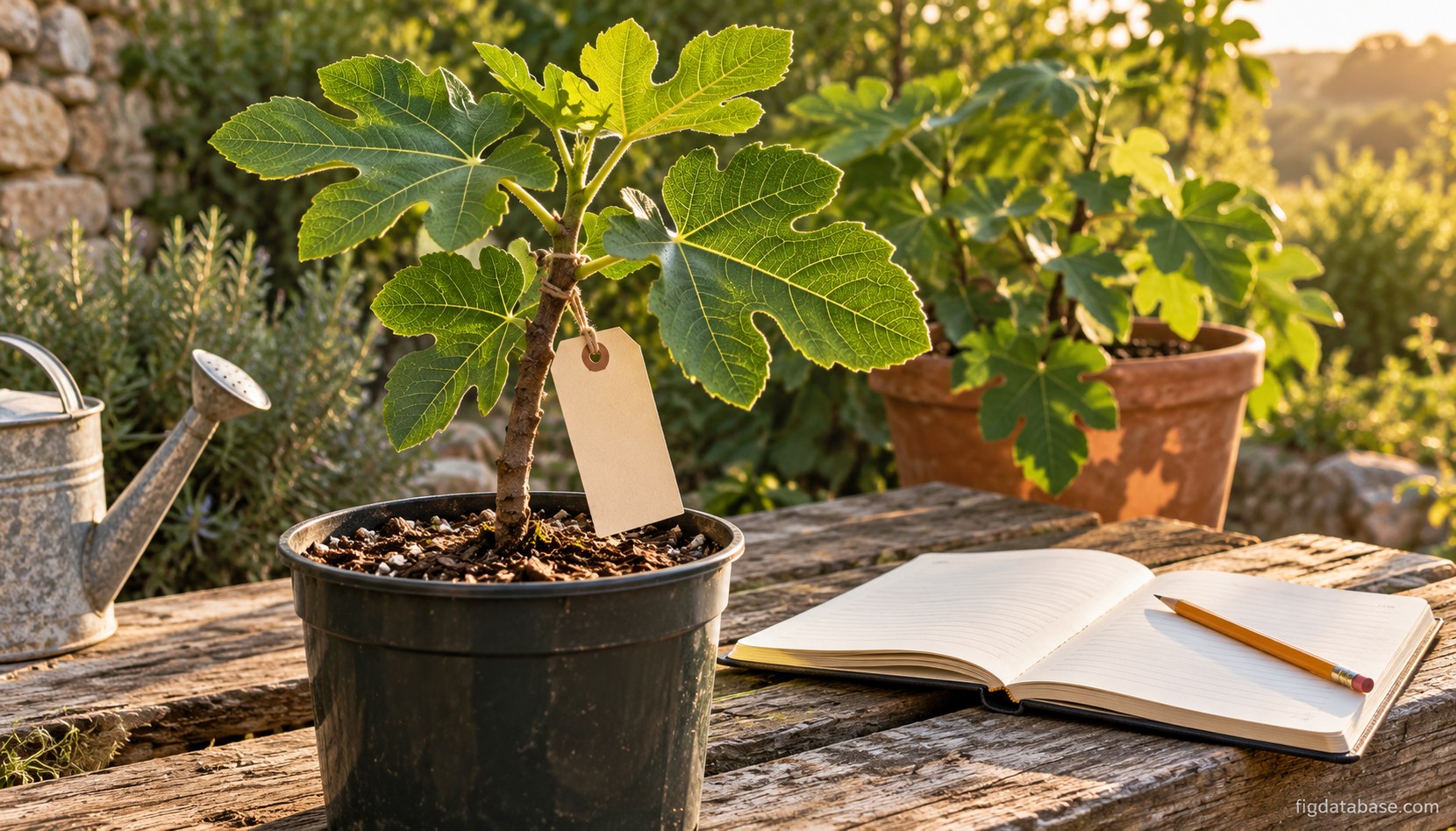
The Label Is Part of the Plant: Building a Fig Accession Record
Preserve what you know about a tree without turning uncertainty into history.
Fig Database Editorial • 13 Nov 2026 • 14The tag on a new fig often contains less information than the conversation that brought it home. A spelling, a source, a story about an older tree, and a date may exist in four different places. Months later, a faded label is all that remains. An accession record gathers those details before they separate, without pretending that every detail has been independently verified.
An accession is an individually tracked addition to a collection. For a home grower, that can be as simple as assigning a stable local identifier to one received plant or batch of cuttings. It need not imitate a research institution's entire database. The important point is that the identifier stays with that material even if the name you use for it later changes or becomes uncertain.
Record the received name exactly as supplied, including an uncertain spelling, then keep a separate place for a standardized display name. Add the date, the source as you are permitted to record it, the form received, and any supporting correspondence. If you received cuttings rather than a rooted tree, say so. Private contact details belong in your private records, not automatically in a publicly shared collection page.
Source claims deserve their own wording. Received from a grower who reports obtaining it from a particular nursery is different from bought directly from that nursery with a dated receipt. Both can be useful, but they support different conclusions. Preserve a claim as a claim until evidence justifies stronger language. A confident retelling should not gradually turn a secondhand account into a documented introduction history.
Photograph the original label and the material on arrival, then connect later photographs to the same identifier. A folder named only with a cultivar can become confusing when two sources supply plants under that name. Dates and identifiers make it possible to distinguish the plants without deciding prematurely whether they are genetically different, synonymous, or simply behaving differently under different care.
Keep observations separate from identity decisions. A fruit photograph, a harvest date, or a distinctive leaf can support comparison, but one characteristic rarely settles an uncertain name by itself. If you change your working identification, keep the earlier entry and record the reason for the change. That leaves a usable history instead of erasing the very uncertainty another collector might need to understand later.
The USDA's GRIN-Global accession search offers a useful reminder that plant records can carry identifiers and documentation beyond a familiar cultivar name. A home collection does not become an official germplasm repository by adopting a numbering system. It can, however, borrow the sensible habit of distinguishing the physical material, its recorded origin, and the observations made after it arrived.
Before sharing a cutting through the Community Fig Exchange, check that its label agrees with your record and explain meaningful uncertainty honestly. You do not need a long pedigree for every common garden tree. You need enough information that the recipient knows what you know, what was reported to you, and what remains unresolved. A few careful lines written when a plant arrives can be more valuable years later than a beautifully printed label carrying an untraceable story.
